
How Much Does Epoxy Floor Coating Cost?
Understanding what epoxy floor coating costs — and what drives the number up or down — is useful long before you’re ready to talk to a contractor. This guide covers the planning figures, the factors that shape a quote, and what a complete estimate should include so you can evaluate one knowledgeably.

The Short Answer
Professionally installed epoxy floor coatings generally fall in the $6–$10 per square foot range, with $8 per square foot serving as a workable planning figure before an estimate is available. At that rate, a two-car garage typically comes in somewhere around $3,200–$4,000. The actual cost for any given floor depends on its size, condition, and the coating system the contractor recommends after seeing the slab — which is why an on-site evaluation is the step that produces a real number.
What Affects the Cost?
Five variables drive most of the variation you’ll see across epoxy floor coating quotes.
01
Floor Size
Larger floors cost more in total, but the per-square-foot price often decreases on bigger projects because setup, equipment, and mobilization time is spread across more area. An accurate measurement — even a rough one — helps the contractor produce a planning figure that’s closer to the mark.
02
Concrete Condition
Concrete that has substantial cracking, surface damage, or an old layer that has to come off before work can begin adds to the preparation scope — and that additional work is factored into the quote. Slab that arrives in reasonably good shape with no prior coating generally requires less prep to get ready.
03
Surface Preparation
Grinding or shot blasting is necessary for adhesion, and the depth and method depend on the floor’s starting state. A harder surface, an existing coating, or more extensive damage calls for more thorough preparation — and that work is part of what distinguishes a quote that produces a durable floor from one that cuts corners to look cheaper.
04
Coating System
Entry-level single-coat systems cost less than multi-layer builds with primers, base coats, broadcast flake, and topcoats. Industrial-grade and polyaspartic topcoats carry higher material costs than standard epoxy systems. The system the contractor recommends for your space and its demands is the primary driver of the materials portion of the total.
05
Decorative Finish
Solid-color epoxy is the most budget-friendly finish option available. Adding a color flake broadcast increases material and labor costs, but the result is a noticeably more refined look that also hides minor surface variation. Metallic epoxy — which produces a high-gloss, marble-like effect through careful application of the wet coat — demands the most labor and sits at the top of the price range.
What Are You Really Paying For?
To understand how these costs connect to the stages of the work itself, our guide to epoxy floor installation walks through each step of a professional installation and explains why every stage matters for the finished result.
A professional epoxy floor installation draws on skilled labor, commercial equipment, and materials matched to what your floor actually needs. The price reflects all of that — not just the coating product that goes on last.
Trimming costs by shortening the prep stage or selecting a lower-grade product is a known path to a floor that doesn’t hold up — and replacing a failed coating costs more than doing it right the first time. The contractor we connect you with walks through what the project requires before any work starts, so you understand what’s included and why each step is there.
Comparing quotes is worthwhile, but the comparison should account for what’s in each one. A quote that reduces the scope of prep, skips repair, or uses fewer coats isn’t a lower price for the same floor.
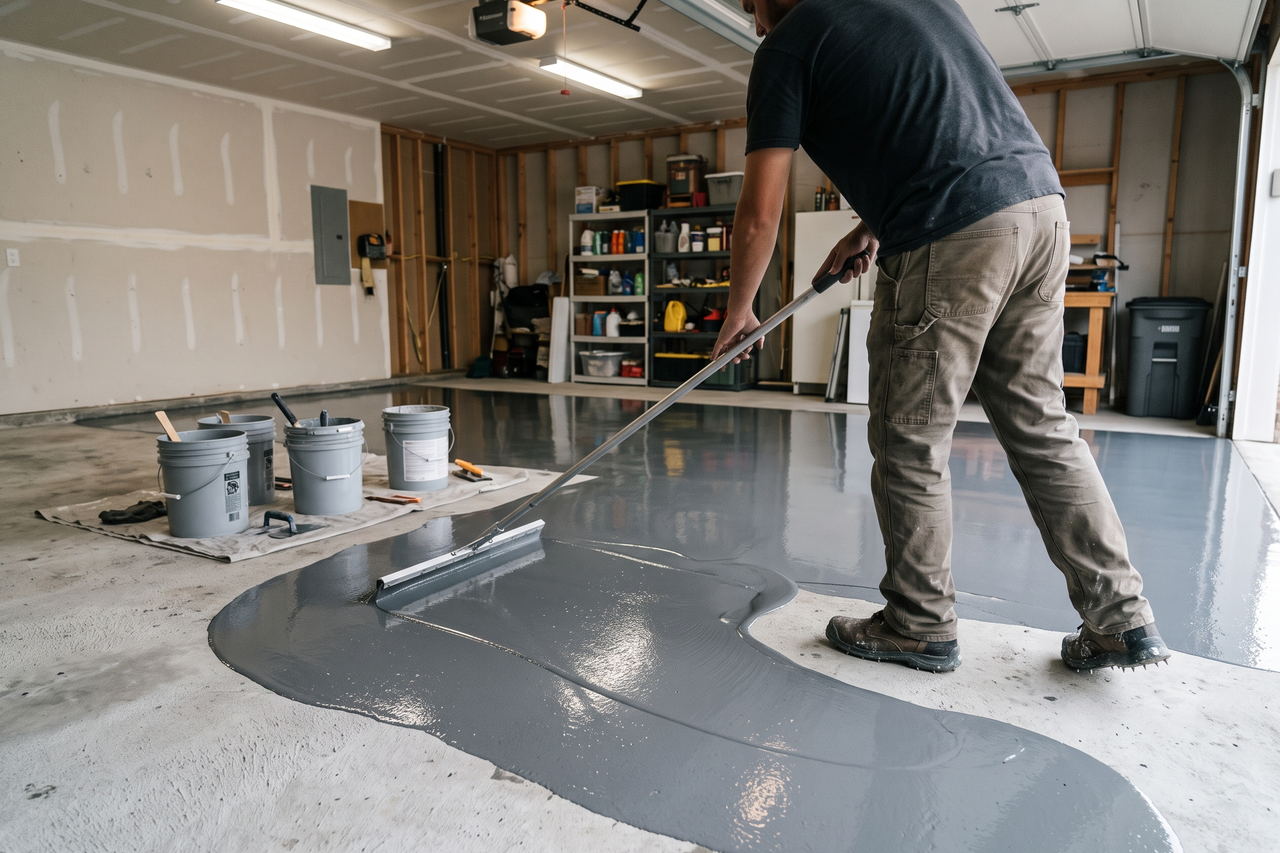
How Much Does a Garage Floor Cost?
The table below applies the $8 per square foot planning figure to four common garage sizes to give you a practical sense of scale.
| Garage Size | Square Footage | Planning Estimate |
|---|---|---|
| One-car garage | 250 sq ft | $2,000 |
| Two-car garage | 400 sq ft | $3,200 |
| Large two-car garage | 500 sq ft | $4,000 |
| Three-car garage | 750 sq ft | $6,000 |
These are planning estimates based on an $8 per square foot figure within the typical $6–$10 range. They are not quotes. Actual pricing depends on your floor’s condition, the preparation required, and the coating system selected. The contractor’s on-site evaluation produces the actual number.
Is It Worth the Cost?
An epoxy floor installed on properly prepared concrete handles the daily load of a working space — vehicles, foot traffic, spills, and cleaning cycles — in a way that bare concrete simply can’t match. A floor matched to the space’s conditions and put in correctly is better positioned to hold up through regular use with routine maintenance.
Bare concrete, by contrast, absorbs oil and other contaminants, degrades under repeated cleaning, and gets progressively harder to maintain as surface damage accumulates. Budget coatings applied over unprepared concrete tend to delaminate or chip, requiring removal and recoating — which costs more than doing the job right once.
How the floor looks the day the contractor leaves is only part of the picture. For garages, basements, and commercial spaces in daily service, a sealed surface that resists staining, handles cleaning, and suits the demands of the space delivers ongoing practical value — not just an initial cosmetic change over what was there before.
What Should Be Included in Your Quote?
A complete estimate from a flooring contractor goes beyond the material that ends up on top. Before moving forward with any quote, verify that it covers:
- On-site evaluation of the concrete’s condition, including moisture assessment where conditions call for it
- Mechanical surface preparation (grinding or shot blasting) matched to the profile the chosen system requires
- Crack and spall repair for visible surface damage identified during evaluation
- Primer coat appropriate to the concrete’s porosity and the system above it
- Base coat and decorative broadcast (if applicable) per the system specification
- Topcoat or finish coat for wear resistance, chemical resistance, and surface protection
- Cleanup and debris removal of grinding dust and preparation material
- Curing instructions and return-to-service sequence, explained before work begins
When something on this list isn’t mentioned in a quote, the right question isn’t whether it’s needed — it’s where it appears in the scope and how it’s being handled.
Frequently Asked Questions
Why do epoxy floor quotes vary so much from one contractor to another?
The most common source of variation is scope, not just price. Quotes that reduce or eliminate surface preparation, use fewer coats, or don’t account for crack repair look less expensive but often describe a different job. Ask each contractor what the quote covers and work through the comparison in detail.
Can I get a cost estimate before a contractor looks at the floor?
The range on this page — $6–$10 per square foot, with $8 as a working figure — is the best available guidance at the planning stage. Those numbers don’t reflect your concrete’s actual condition, the prep scope your slab requires, or which system the contractor recommends. An on-site evaluation is the step that turns a planning figure into a real, usable number.
Does concrete condition really change the total that much?
Yes, noticeably at times. Concrete with extensive cracking, an existing coating that has to be stripped, or a surface calling for heavier grinding adds labor and materials to the prep phase. On some projects, that prep work accounts for a substantial portion of the total. The evaluation is what determines whether any of that applies to your floor.
Does a larger floor always cost less per square foot?
Not always, but larger projects often see lower per-square-foot costs because setup and equipment time is distributed across more area. A smaller floor may carry a higher per-square-foot figure at the same quality level. The contractor explains how your floor’s size factors into the estimate.
Are there costs I should anticipate beyond the quote itself?
Clearing the space — moving storage racks, tools, vehicles, and anything else on the floor — is generally the property owner’s job before the contractor arrives. If anything is anchored to the floor or built in, bring it up during the estimate conversation. Structural concrete repairs or plumbing work are outside the flooring scope and handled separately.
Is a higher per-square-foot price a sign of a better floor?
Not on its own — but a higher number often indicates a more complete system: additional coats, materials chosen for the specific environment, or a coating type better matched to the floor’s demands. The contractor should be able to explain what’s behind the figure and why the specified system fits the project. If a quote can’t be clearly explained, that’s worth paying attention to.
Ready to Get a Real Number for Your Floor?
Reach out to describe your floor and your goals, and we’ll work to connect you with an independent flooring contractor serving Madisonville, KY and surrounding areas who can assess what the project actually requires and, if it’s a fit, prepare a customized quote.