
Epoxy Garage Flooring
in Madisonville, KY
A sealed, hardworking floor that holds up to tires, tools, and whatever life in that garage demands.
Your Garage Should Feel Like Part of Your Home
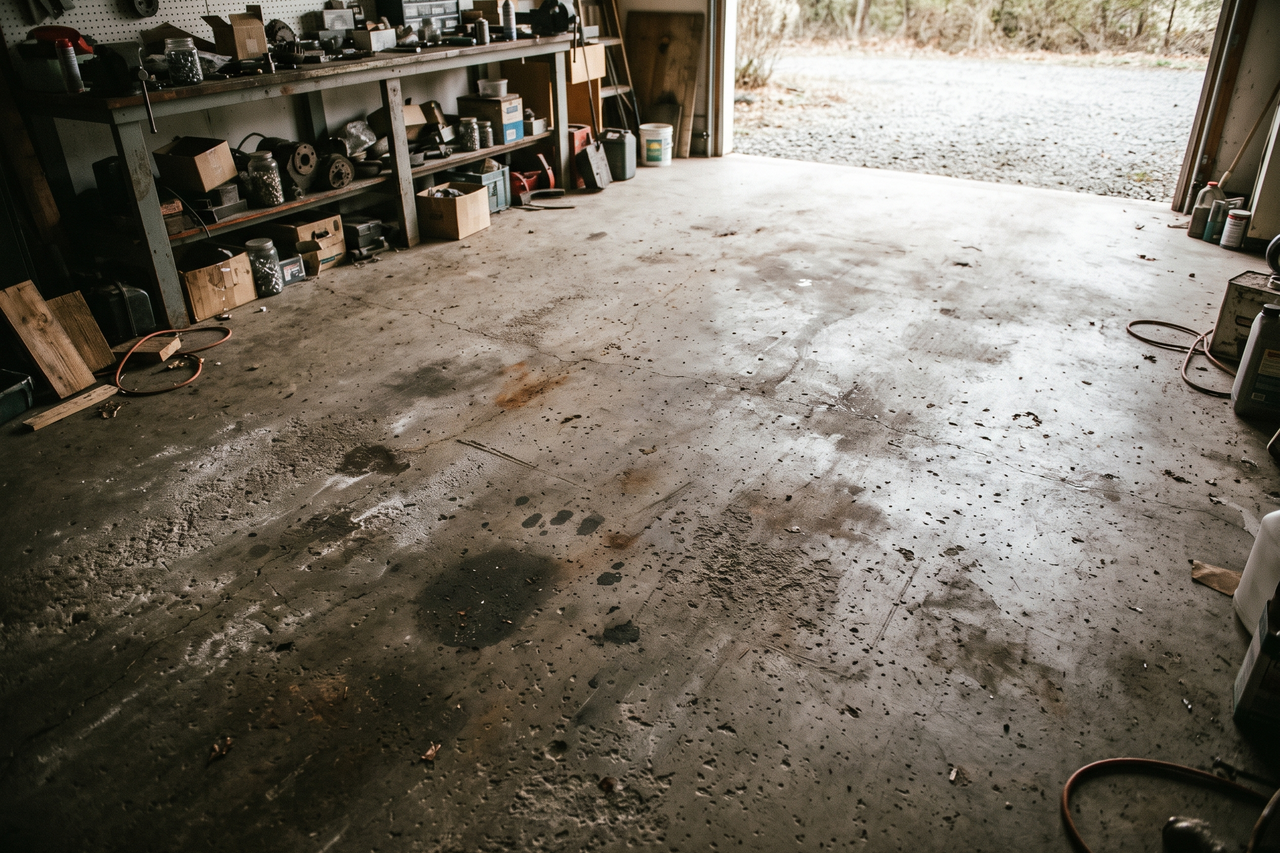
For many households, the garage door sees more daily use than the front entrance. Yet the floor beneath it rarely gets attention — it accumulates oil stains, road-salt residue, and a persistent layer of concrete dust that returns no matter how often the space gets swept.
Untreated concrete is an open surface. Spills don’t wipe up — they absorb in and stay. The dust and grit that settle on an unsealed slab travel back into the house with every trip inside.
Paint kits designed for garage floors look manageable at the hardware store, but they depend on adhesion conditions that an unground, unrepaired slab rarely provides. Regular use — vehicles sitting on the surface, temperature swings, moisture from below — exposes the weak bond that skipped preparation leaves behind.
You Don't Have to Know Which Garage Floor Coating Is Right
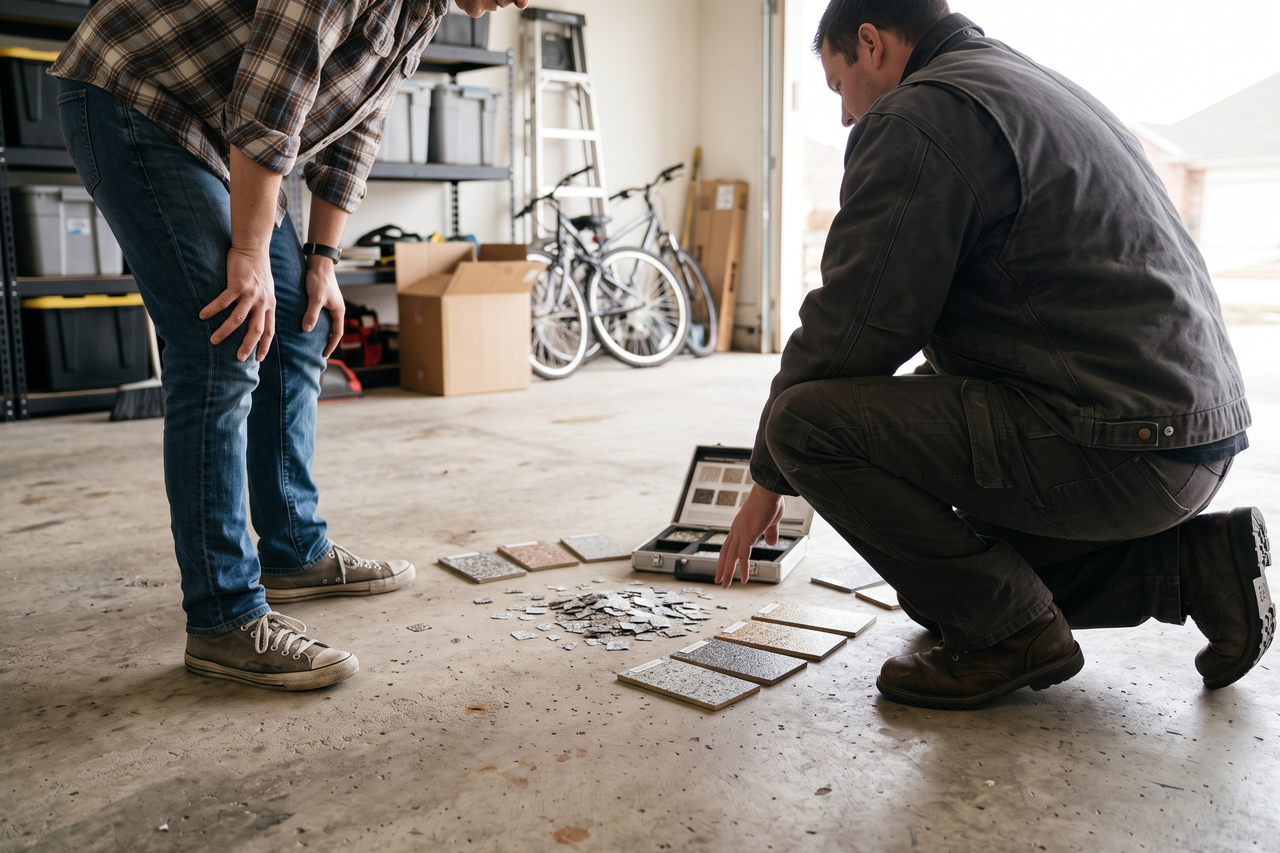
Epoxy, polyaspartic, decorative flake, metallic finishes, solid color topcoats — the choices are real, and they matter. The right system for a given garage depends on specifics: whether the slab has cracks, old paint, or moisture concerns; how the space gets used day to day; and how much natural light the floor receives.
Every recommendation begins with the concrete. The contractor looks at the slab condition, tests for moisture where the situation calls for it, and reviews what’s currently on the surface before suggesting a system and finish suited to the garage and the goals behind the project. Decorative flake builds in texture that masks the scuffs of everyday use. Metallic epoxy produces a high-gloss, one-of-a-kind look well suited to spaces used for hobbies or display.
Your Garage. Your Style. Three Simple Steps.
A clear path from the first conversation to a floor you’ll be proud to pull into.
01
Show Us Your Garage
Describe the space, what you use it for, and what the floor looks like right now.
02
Choose Your Floor
The flooring contractor reviews the slab, walks through system and finish options, and prepares a quote grounded in what your concrete actually needs.
03
Come Home to a Finished Garage
The contractor prepares the concrete and applies the coating, then explains when the floor is ready for vehicles and regular use.
Ready to See What Your Garage Could Become?
The floor is often what makes a garage feel genuinely finished — or keeps it from ever quite getting there. Share a few details about the space and what you’d like to see change, and we’ll work to connect you with an independent flooring contractor who can review the project and, if it’s a fit, prepare a customized quote.
The Wrong Garage Floor Can Cost You Twice
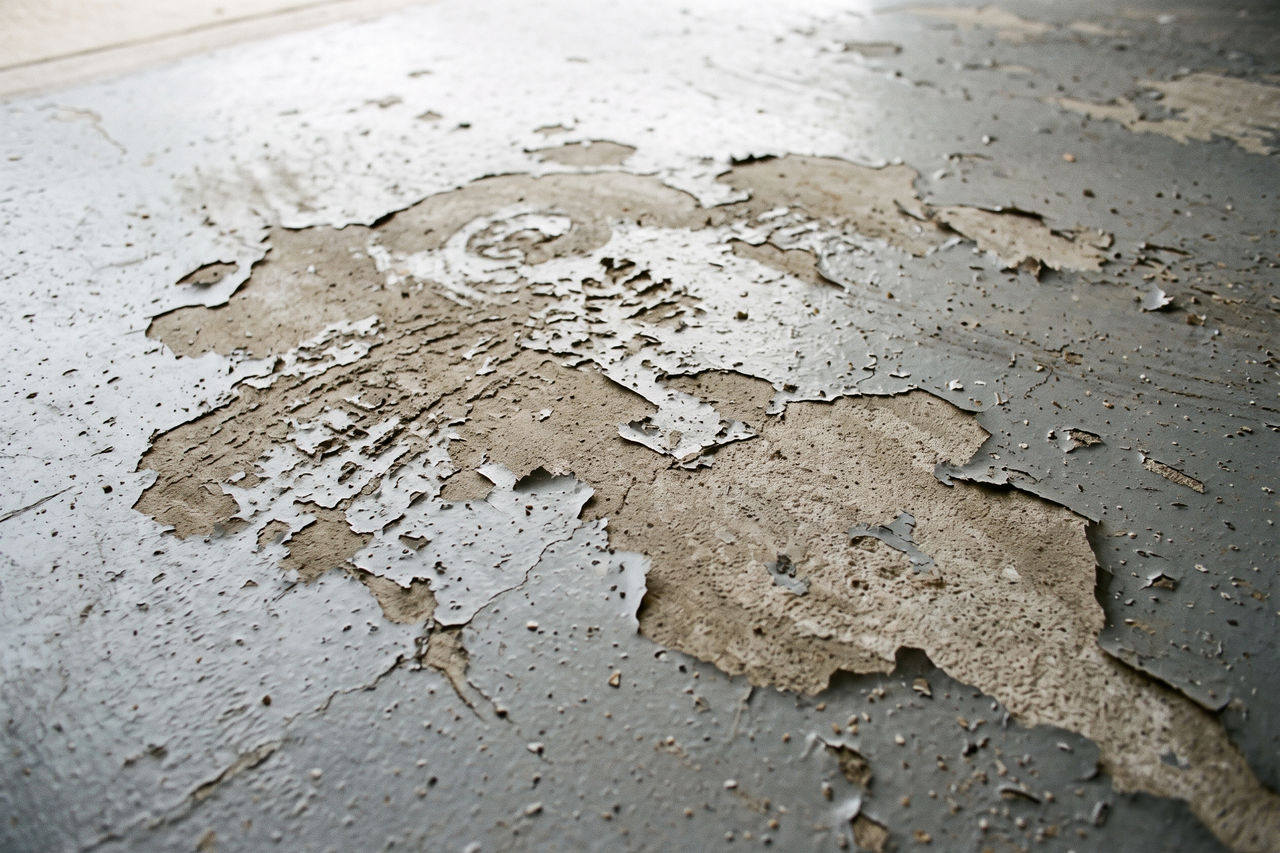
Many lower-cost coating products ship without any provision for the surface preparation a lasting bond requires. If the slab isn’t ground to the right profile and existing cracks or moisture concerns aren’t dealt with beforehand, even a decent product bonds poorly to the concrete beneath it. Normal use — parked vehicles, temperature changes, occasional moisture — finds that shortcoming and pushes it to the surface.
Once a coating begins to peel or blister, there is no partial fix. The failed material has to come off entirely, bringing the project back to bare concrete and to the same preparation work that was bypassed the first time. The result is effectively addressing the floor a second time at additional cost.
Getting the right system onto a properly prepared slab from the start tends to be the more cost-effective path when you consider the floor’s performance over its lifetime.
A Garage You're Proud to Come Home To
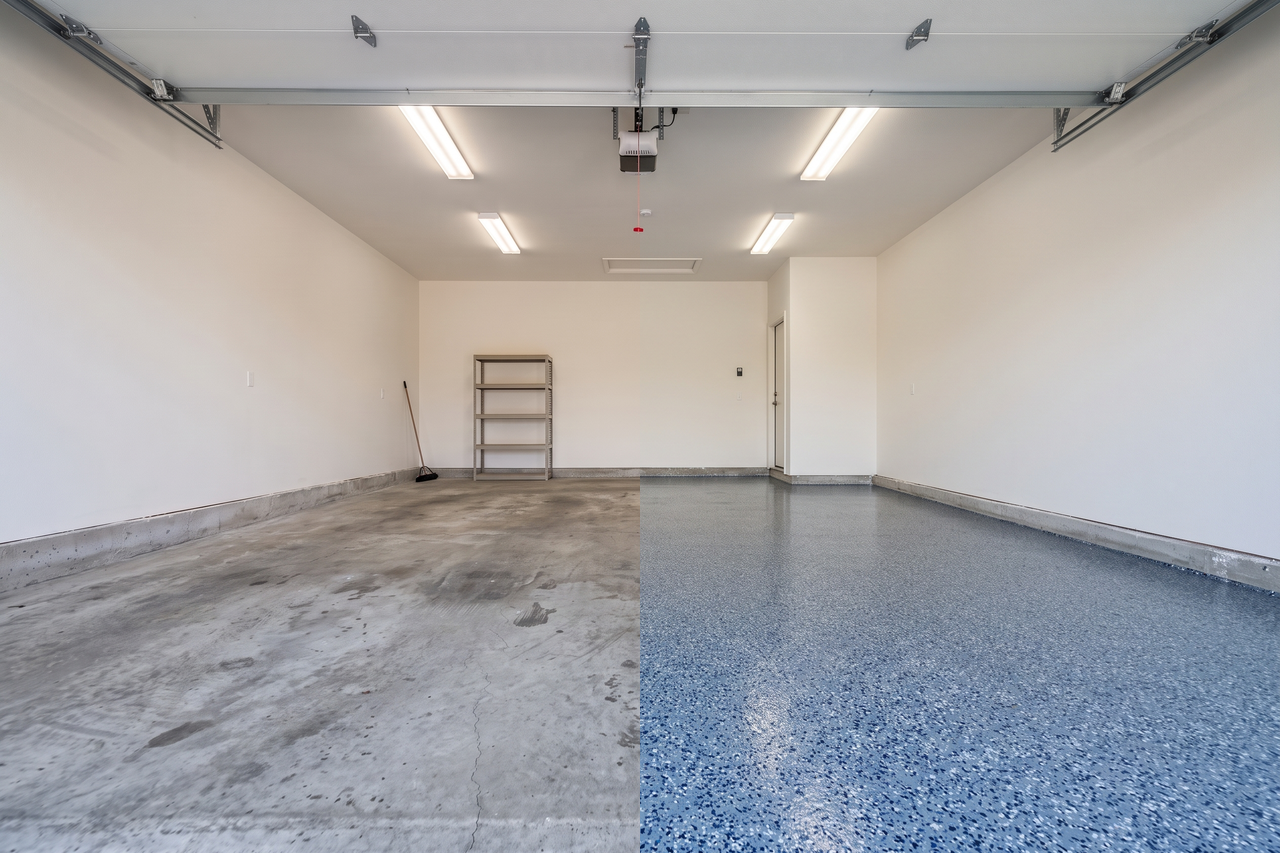
Coating the garage floor does more than change how it looks. Grease drips, road salt, and tracked-in debris settle on the sealed surface rather than soaking into it, so routine cleanup becomes a matter of running a mop rather than scrubbing porous concrete that absorbs whatever lands on it.
The practical uses of the space expand as well. A sealed floor gives a workshop area a cleaner foundation, makes storage shelving feel more intentional, and turns coming home to the garage into something that actually feels good.
Whether the space is used for parking, hobby projects, or organized storage, a properly coated floor signals that it received the same consideration as the rest of the home.
What Does Garage Floor Coating Cost?
Several factors shape what a garage floor coating project costs: the size of the slab, how much wear or damage the concrete shows, the scope of preparation and repair work involved, the coating system that fits the space, and the finish type you select. Solid color, decorative flake, and metallic options differ in materials and in the labor each one requires.
The most dependable figure comes from having a contractor look at your actual floor. Once the slab is evaluated and your goals are understood, a customized quote can be prepared based on what the project specifically requires.
Common Garage Floor Questions
Does a professional garage floor coating hold up under hot tires?
Coating systems applied over properly prepared concrete are built to handle hot-tire contact far better than consumer paint products or roll-on kits from hardware stores. How well any system performs comes down to the coating chosen and how thoroughly the concrete was prepared — both of which the contractor weighs before making a recommendation.
Can a cracked or oil-stained garage floor still be coated?
Usually. Surface cracks and damage are repaired as part of the preparation work, and oil contamination is cleaned and treated before any coating is applied. Slabs with deeper saturation may warrant a closer assessment first to determine what level of performance the concrete can realistically support.
Will the finished floor be slippery?
Smooth, high-gloss surfaces can get slick underfoot when they’re wet. Decorative flake creates a natural texture that adds grip across the whole surface, and anti-slip additives can be worked into the topcoat in areas where wet conditions show up regularly — near a garage entry or around a floor drain, for instance.
When can I park in the garage again?
The coating system and the conditions present during curing both affect the return-to-use timeline. Before any work begins, the installer should explain the expected schedule so you can make arrangements in advance.