Commercial Epoxy Flooring
in Madisonville, KY
A durable, professional floor that holds up to daily operations and still looks the part.
Your Floors Should Work as Hard as Your Business Does
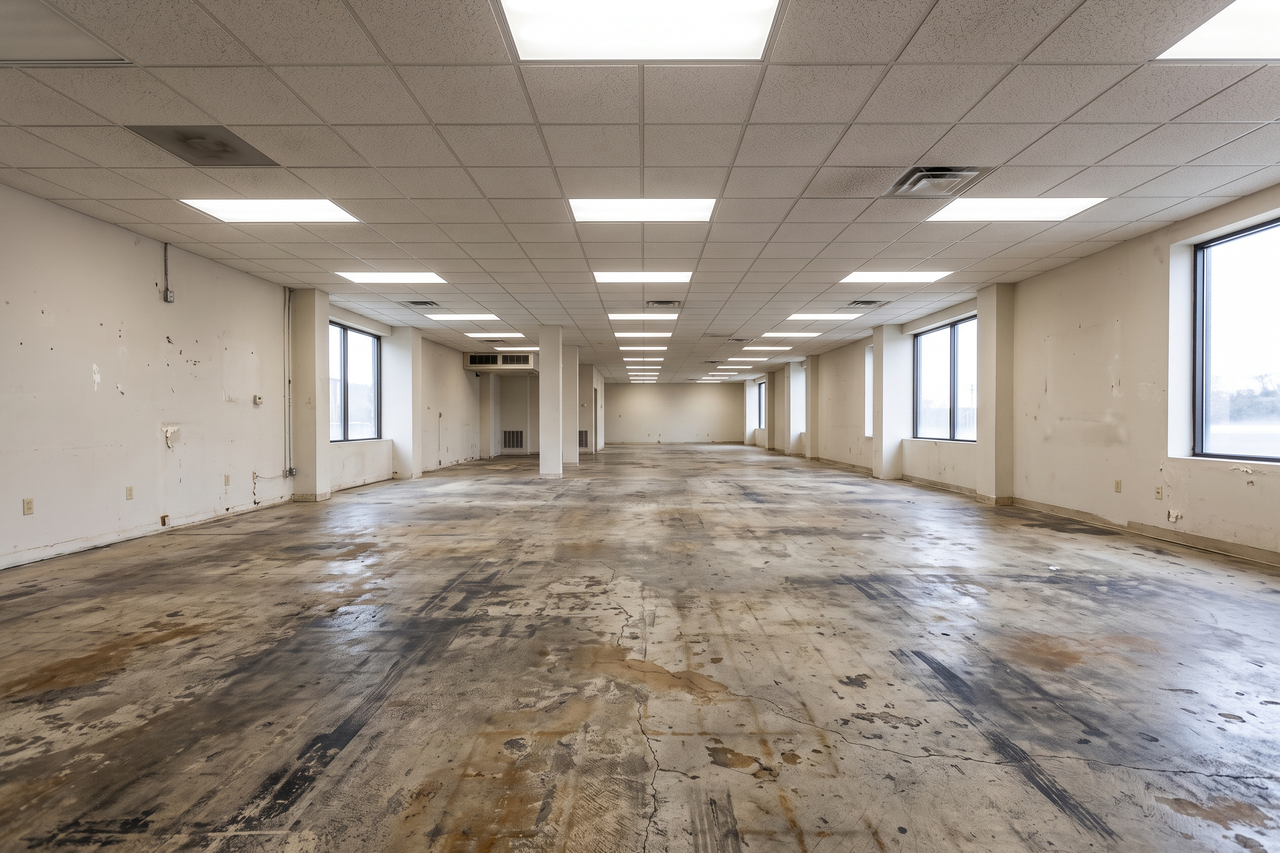
Commercial spaces ask more of a floor than any residential environment does. Whether the setting is a retail store, a warehouse, a corporate office, or a showroom, the concrete underfoot handles sustained foot traffic, wheeled equipment, chemical cleaners, and the kind of daily load that residential surfaces rarely face.
A floor that absorbs that kind of use without adequate protection deteriorates visibly — and in spaces where customers and clients walk through, a worn surface makes an impression that runs against what most businesses are working to project.
Beyond appearance, bare or poorly protected concrete creates a persistent cleaning problem. Grime works into the open surface and resists standard cleaning methods, adding time and effort to routines that a sealed floor would handle with much less trouble.
The Right Floor Starts With Understanding Your Space
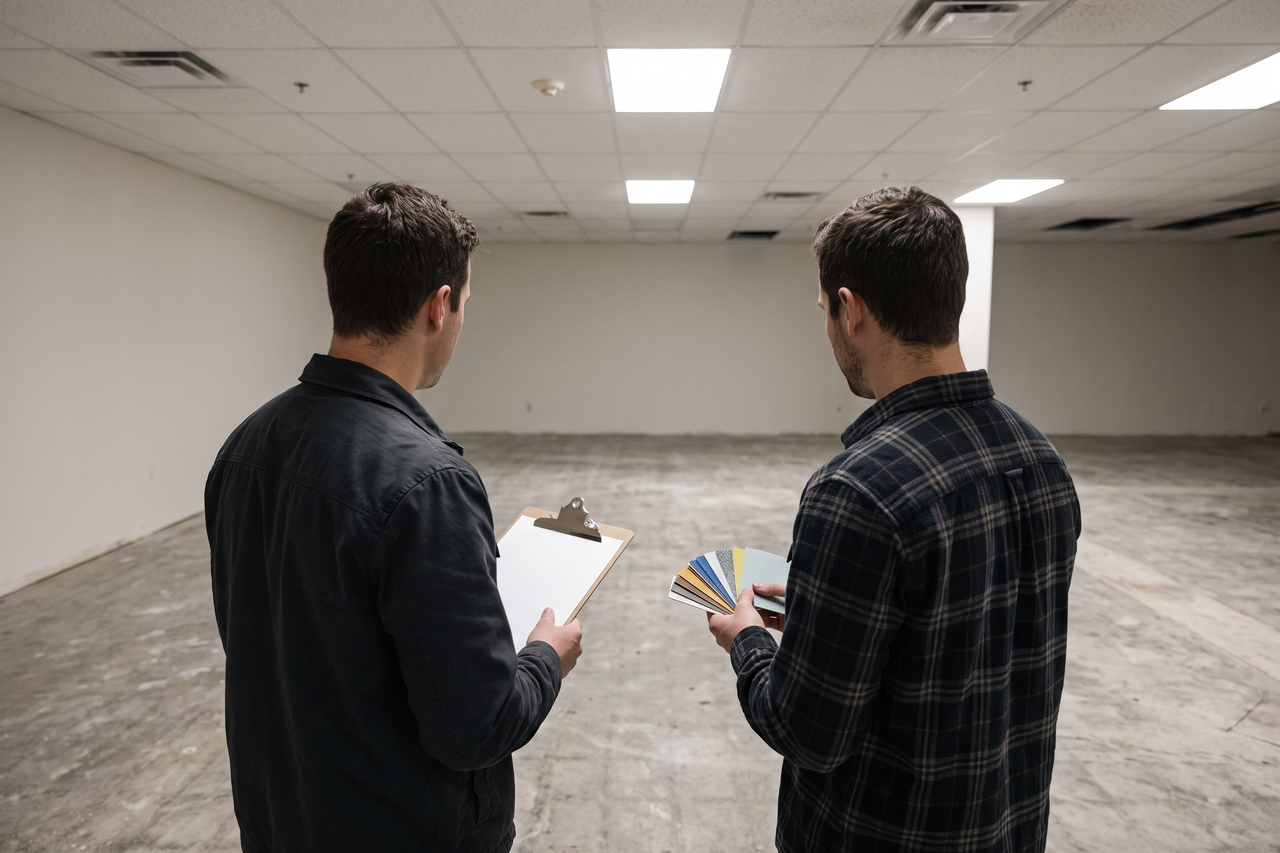
A retail showroom, a warehouse loading area, a commercial corridor, and a corporate office each place different demands on a coating system. The right system is shaped by what kind of traffic crosses the floor, what equipment contacts it, what chemicals it’s exposed to, how visible it is to visitors, and what the daily cleaning routine looks like.
The project starts with understanding the facility’s actual operating conditions. The flooring contractor examines the concrete and the demands the space places on it before recommending a system — not a standard option applied without regard to how the facility actually runs.
Finish options range from clean solid colors to broadcast flake that gives customer-facing floors a more textured, professional look. Showrooms and retail environments can incorporate metallic epoxy where a distinctive appearance supports the space.
A Commercial Flooring Project Without the Guesswork
Commercial projects work best when the process stays clear and predictable from the start.
01
Tell Us About Your Property
Share the type of space, how it functions day to day, the current condition of the floor, and any operational timing considerations that matter to the business.
02
Get a Flooring Plan
After reviewing the slab and learning how the space operates day to day, the flooring contractor recommends a coating system and preparation scope suited to what the facility actually requires.
03
Transform Your Space
The contractor prepares the floor and installs the coating, with the expected schedule communicated clearly before any work begins.
Planning a Commercial Flooring Project?
Every commercial flooring project is shaped by the facility it belongs to — the size, the use, the daily demands placed on the surface. Getting those specifics in front of the right contractor early makes the process cleaner and leads to more accurate planning. Share the property details and what the floor needs to do, and we’ll work to connect you with an independent flooring contractor who can evaluate the project and, if it’s a fit, prepare a customized estimate.
The Wrong Floor Can Become an Expensive Problem
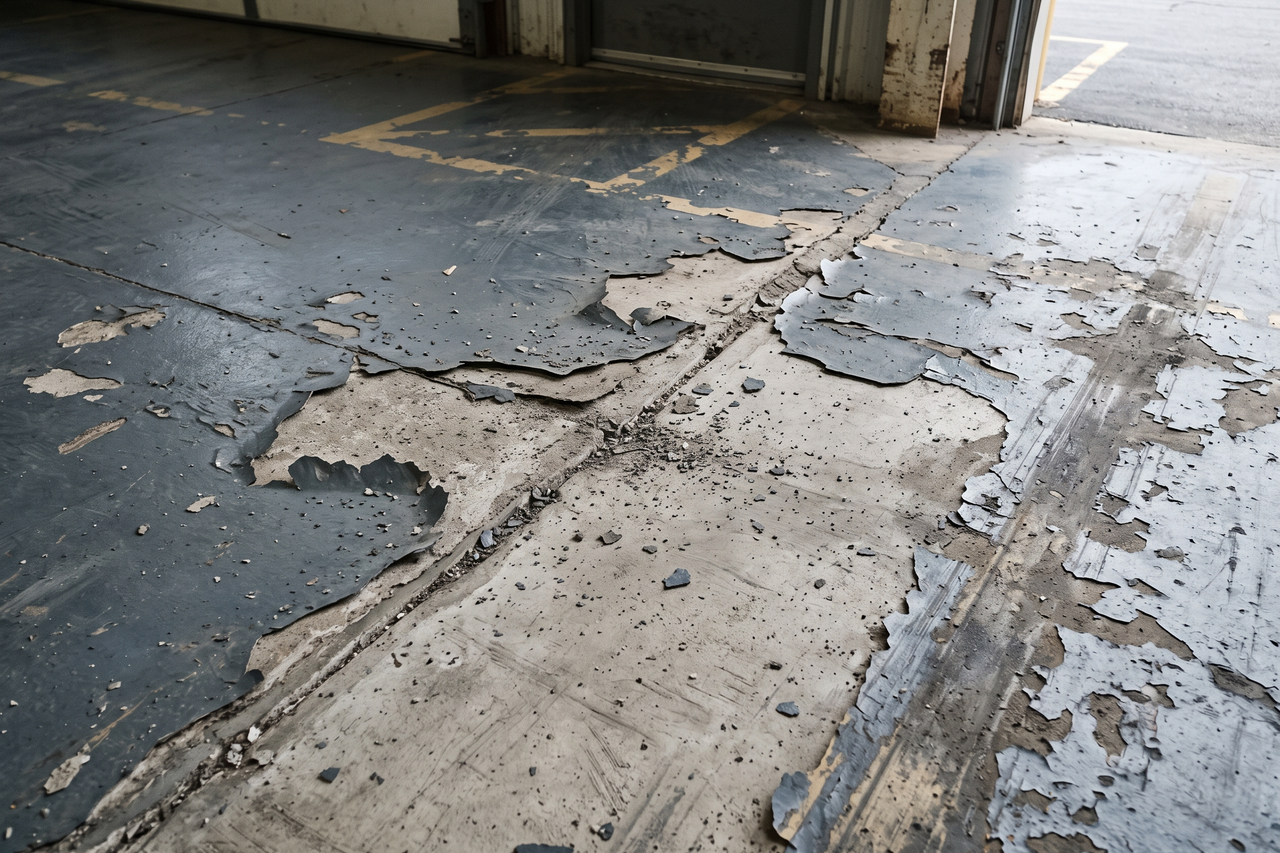
A commercial coating that chips, wears through, or peels away from the slab is more than a cosmetic issue. Deteriorated surfaces can create safety hazards for employees and visitors, complicate routine cleaning, and undermine the professional image the business is meant to project.
Addressing a failed commercial coating is genuinely disruptive. The space has to be cleared, the failed material has to be ground off the concrete, and the project restarts from scratch — with added cost that proper installation the first time would have avoided.
Matching the coating system to the real conditions of the facility and making sure the concrete is properly prepared before anything goes down gives the floor a meaningful chance of holding up through the demands a commercial environment places on it.
A Floor That Makes Your Space Work Better
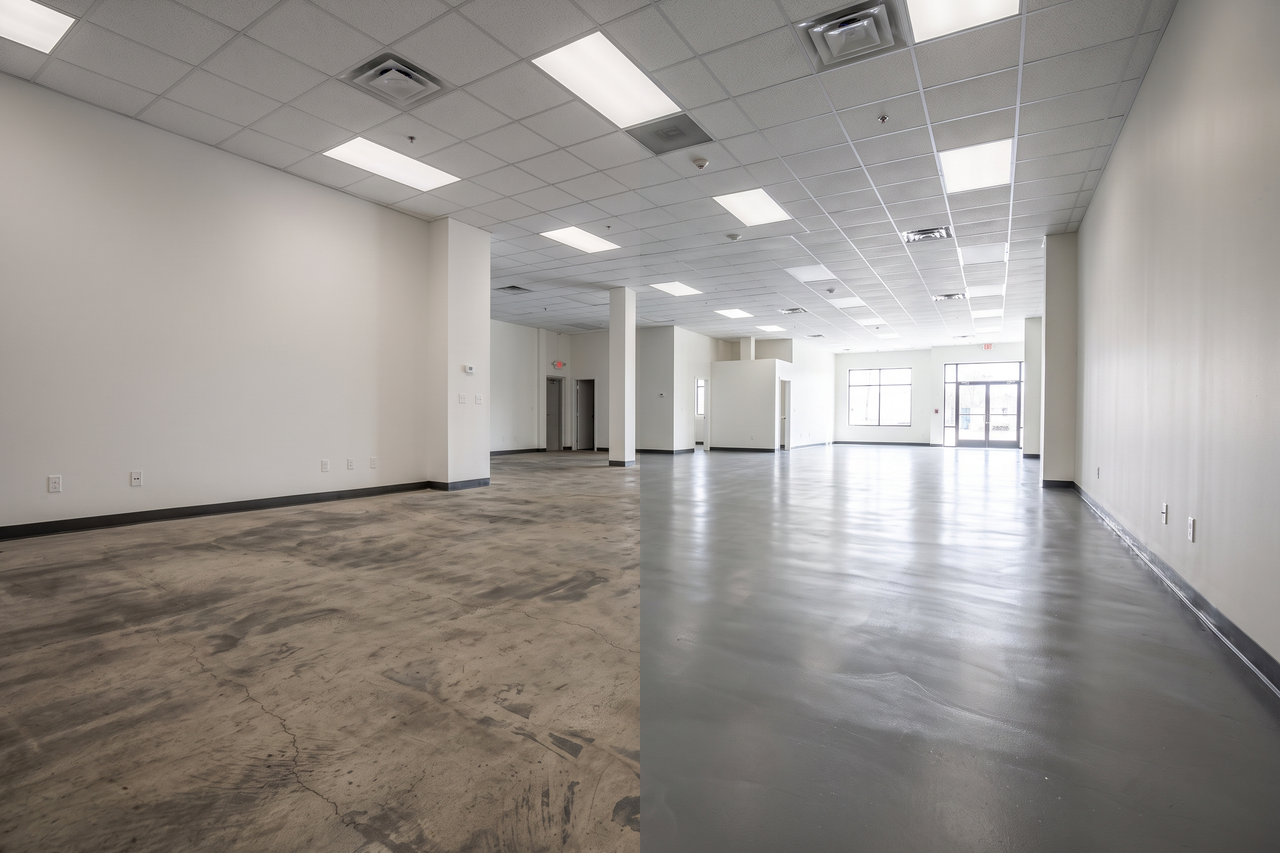
Day-to-day maintenance is one of the clearest practical benefits of a well-installed commercial floor. Sealed surfaces resist staining, tolerate regular cleaning with compatible products, and hold their condition through sustained traffic and equipment contact far better than bare concrete does. That resilience translates directly to less maintenance effort over time.
A more reflective floor can lift the perceived brightness of a commercial space without any changes to the lighting itself. Safety striping, zone colors, and aisle markings can be incorporated into the coating plan wherever operations benefit from visual cues at floor level.
Done well, the floor supports how the facility operates rather than working against it.
What Does Commercial Epoxy Flooring Cost?
Several variables determine what a commercial flooring project costs: the area involved, what the concrete inspection reveals, the extent of surface preparation and repairs needed, the performance specifications of the coating system, any zone striping or decorative requirements, and the operational demands of the space. No two commercial projects price out the same way.
Scheduling and sequencing are additional variables. Whether the project can proceed in a single run or needs to be divided into sections depends on the scope and what the contractor determines is practical for the space — those details are worked through during the estimate conversation.
Common Commercial Flooring Questions
Can a commercial flooring project be scheduled to reduce disruption to the business?
There is no standard answer — it comes down to the scope of the project and what the contractor determines is practical for the facility. Some commercial spaces can be coated in sections while keeping part of the floor operational; others are best handled as one continuous installation. Phasing options and timing are details the contractor and client work through during the estimate — feasibility is project-specific and determined by what the space actually allows.
How easy is a sealed commercial epoxy floor to maintain?
Maintenance on a sealed epoxy surface is far less demanding than on raw concrete. A regular sweeping and mopping routine with a compatible product keeps most commercial floors in good shape. Spills respond better before they set, and the surface tolerates repeated cleaning and foot traffic more durably than porous concrete does.
Can a commercial coating handle heavy equipment and pallet jack traffic?
Whether a system is appropriate for that kind of use depends on the coating selected and the specific demands of the facility. Coatings designed for warehouse and light-industrial applications are formulated to handle heavier loads and wheeled equipment better than systems built primarily for foot-traffic environments. The contractor evaluates what the space requires and makes a recommendation based on those conditions.
How do I know which coating system is right for my commercial space?
Selecting the right system means accounting for traffic patterns and volume, the cleaning products and chemicals the floor contacts, required traction levels, appearance expectations, and how much operational disruption is acceptable during installation. Epoxy, polyaspartic, and hybrid coatings each carry characteristics suited to different commercial environments. The contractor’s recommendation follows an evaluation of the actual facility — not a general-purpose product guide.