Industrial Epoxy Flooring
in Madisonville, KY
A heavy-duty coating system matched to the demands of your facility.
Your Floor Takes the Abuse. Your Operation Shouldn't
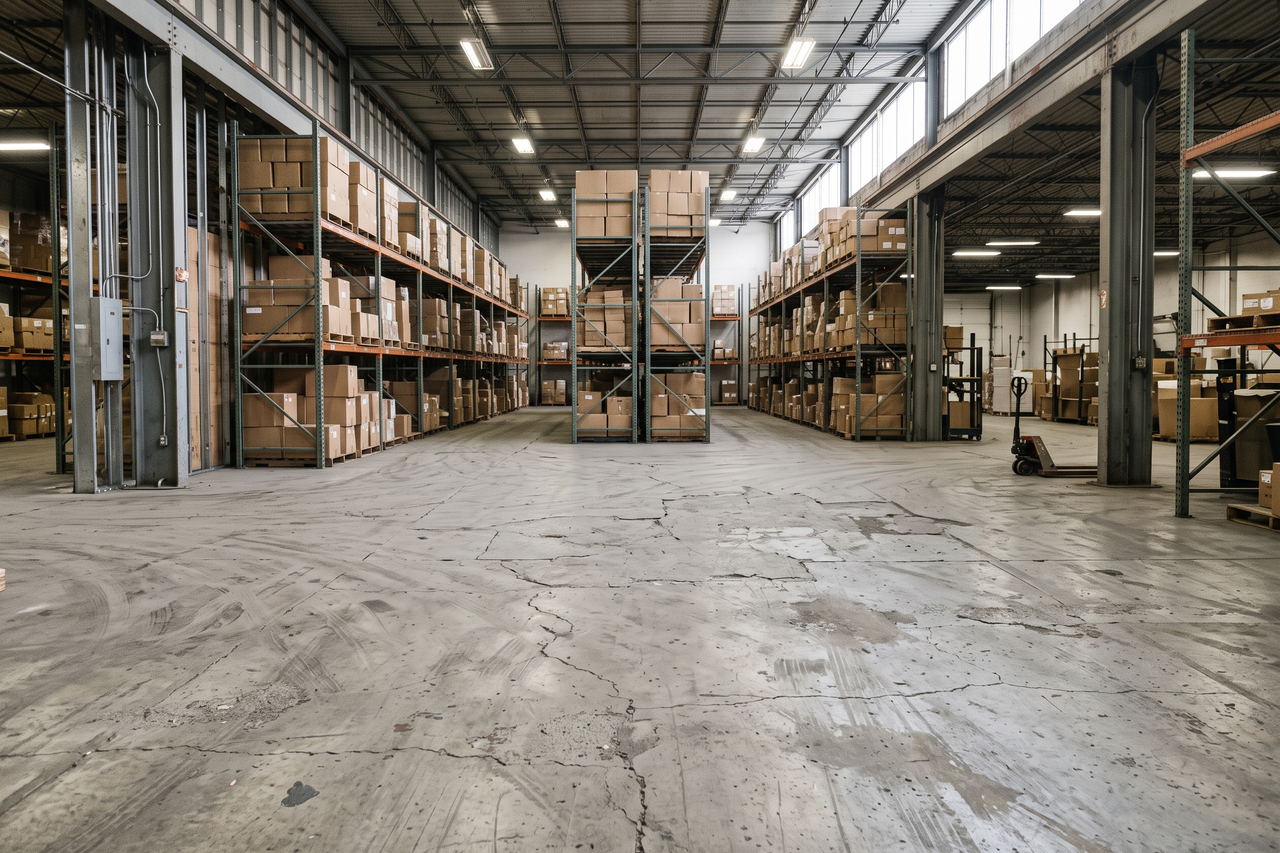
Industrial floors see punishment that most surfaces never face. Forklifts, pallet jacks, and heavy rolling stock cross the same concrete day after day. Chemical spills, standing water, and abrasive debris work into the surface over time. What starts as surface wear can progress into something that affects how your facility functions.
A deteriorating floor is more than an inconvenience. Damaged concrete can create tripping hazards, complicate sanitation routines, and make it harder to keep safety markings legible. Facilities that depend on defined traffic lanes, equipment staging areas, or strict cleanliness standards feel the impact of a failing floor in ways that go well beyond appearance.
Replacing or upgrading a heavily used industrial floor is a significant decision, and the right coating system depends on your specific conditions — what the floor is exposed to, how the space is used, and what the concrete looks like below the surface. That assessment is where any serious conversation about industrial flooring begins.
Your Facility Determines the Right Flooring System
There is no single industrial coating solution that fits every facility. A system that performs well in a food processing environment may differ from what holds up in an automotive shop, a manufacturing plant, or a distribution center. Chemical exposure, equipment weight, forklift wheel type, and temperature range all influence what the contractor assesses when evaluating your floor.
We connect you with a flooring contractor who can review your facility, examine the concrete, and evaluate the operational demands of your space. The contractor assesses the floor condition, asks about your use case, and determines whether an epoxy system — or a different coating — is an appropriate match for your facility’s actual conditions.
Depending on what the evaluation reveals, the contractor may discuss broadcast flake systems for grip and durability, solid-color coatings suited to specific chemical resistance needs, or other approaches. Industrial facilities that include office or showroom areas may benefit from different specifications in those zones. If your project involves lighter commercial spaces as well, our guide to commercial epoxy flooring may be a useful starting point.
Built Around Your Facility. Not the Other Way Around
Here is how the process works when you connect with a contractor through us.
01
Evaluate the Facility
The contractor inspects the concrete, reviews the facility’s operational demands, and identifies conditions — such as moisture, surface contamination, or existing damage — that will shape the approach.
02
Build the Right Flooring Plan
Based on that evaluation, the contractor recommends a coating system matched to your facility’s traffic patterns, chemical exposure, and performance requirements.
03
Put Your Floor to Work
Once preparation and application are complete, the installer explains the expected cure process and what to plan for before the floor returns to active use.
Need a Floor Built for a Tougher Environment?
Industrial facilities put more strain on a floor than almost any other environment. If your current surface is showing wear, creating maintenance headaches, or struggling to hold safety markings, it may be time to look at what a properly specified coating system could do for your operation.
We’ll work to connect you with an independent flooring contractor who can review your facility and, if it’s a fit, prepare a customized estimate for your project.
Floor Failure Creates Problems Beyond the Floor
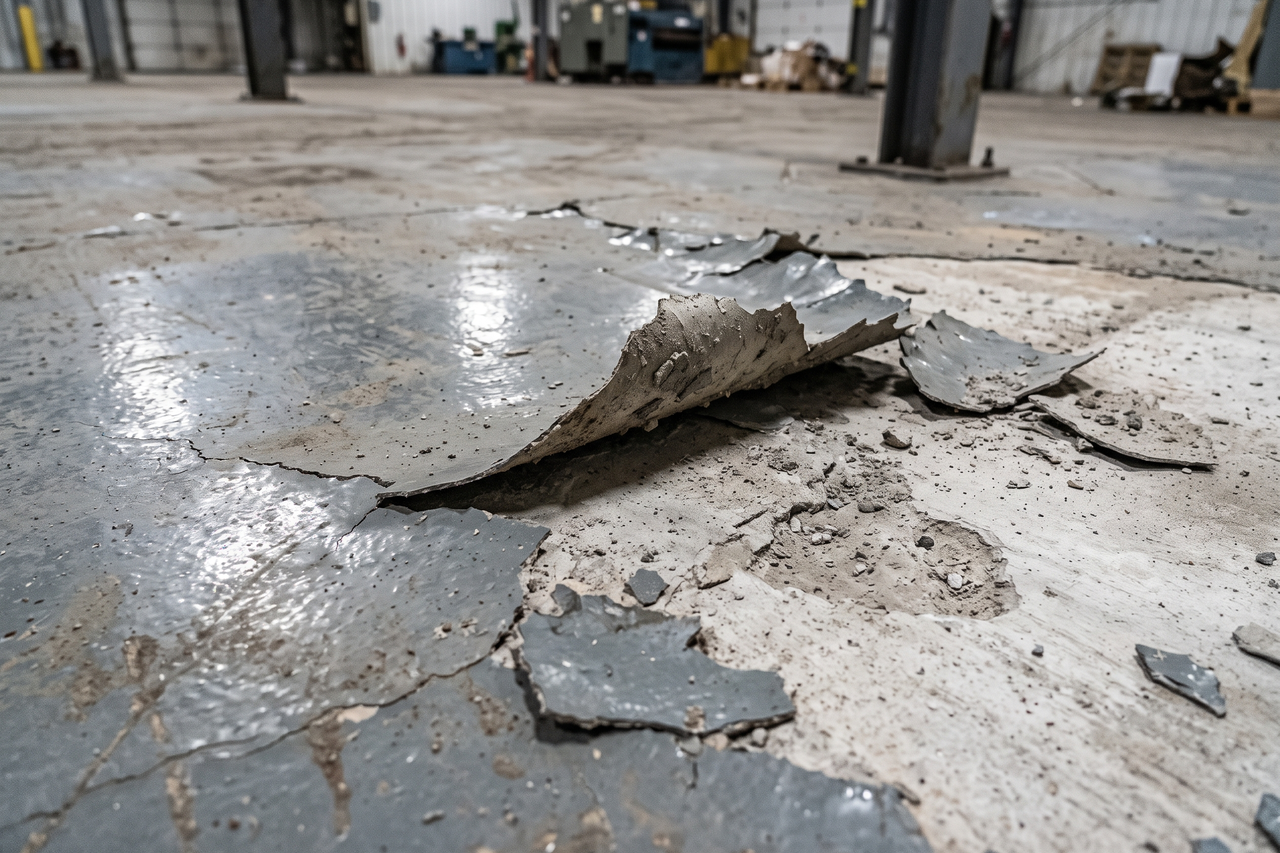
A coating that fails in an industrial setting is rarely just a cosmetic issue. When a floor deteriorates, the consequences reach into daily operations — dust contamination, increased cleaning demands, reduced traction in critical movement zones, and difficulty maintaining visible, compliant safety markings across the facility.
Failures often trace back to preparation. Inadequate surface grinding, moisture that was not tested or properly addressed, or a coating system that was not matched to the facility’s actual conditions can all contribute to adhesion problems. Preparation is often part of what goes wrong when industrial coatings fail prematurely — alongside coating selection and installation conditions.
Addressing a failed floor takes time and resources. Getting the evaluation and specification right the first time generally costs less than dealing with a coating that did not hold. The contractor’s assessment is where that process begins — examining what is there, understanding what has failed, and identifying why before recommending a path forward.
A Floor That Keeps Up With Your Operation
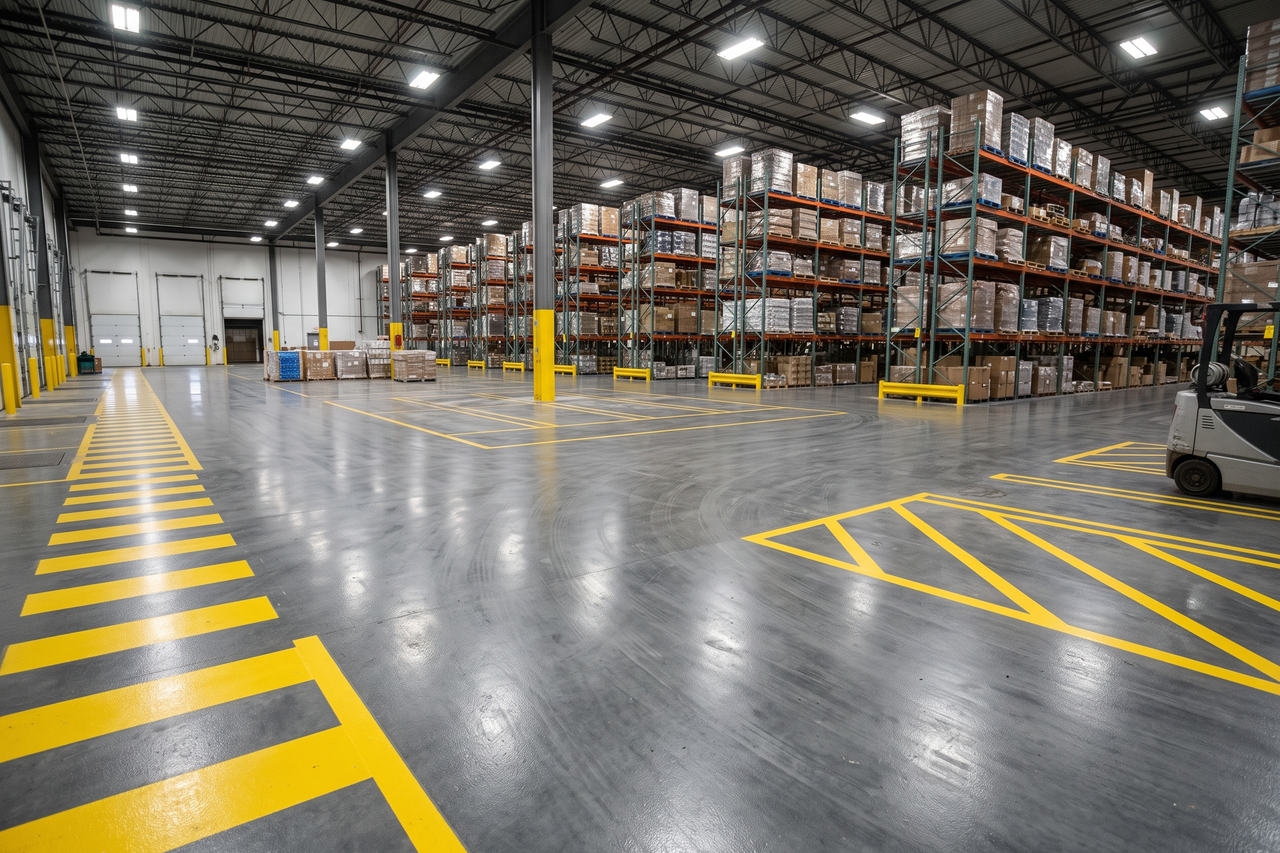
When an industrial floor is properly specified, prepared, and coated, it can become an asset rather than a maintenance burden. Clean, sealed surfaces are easier to sweep and maintain. Defined lane markings stay visible across the work area. The floor handles its share of the daily workload without demanding constant intervention.
The right system depends entirely on the evaluation — what the concrete looks like, what the space is used for, and which coating product is matched to those conditions. Results vary based on the system selected and the actual conditions present in your facility.
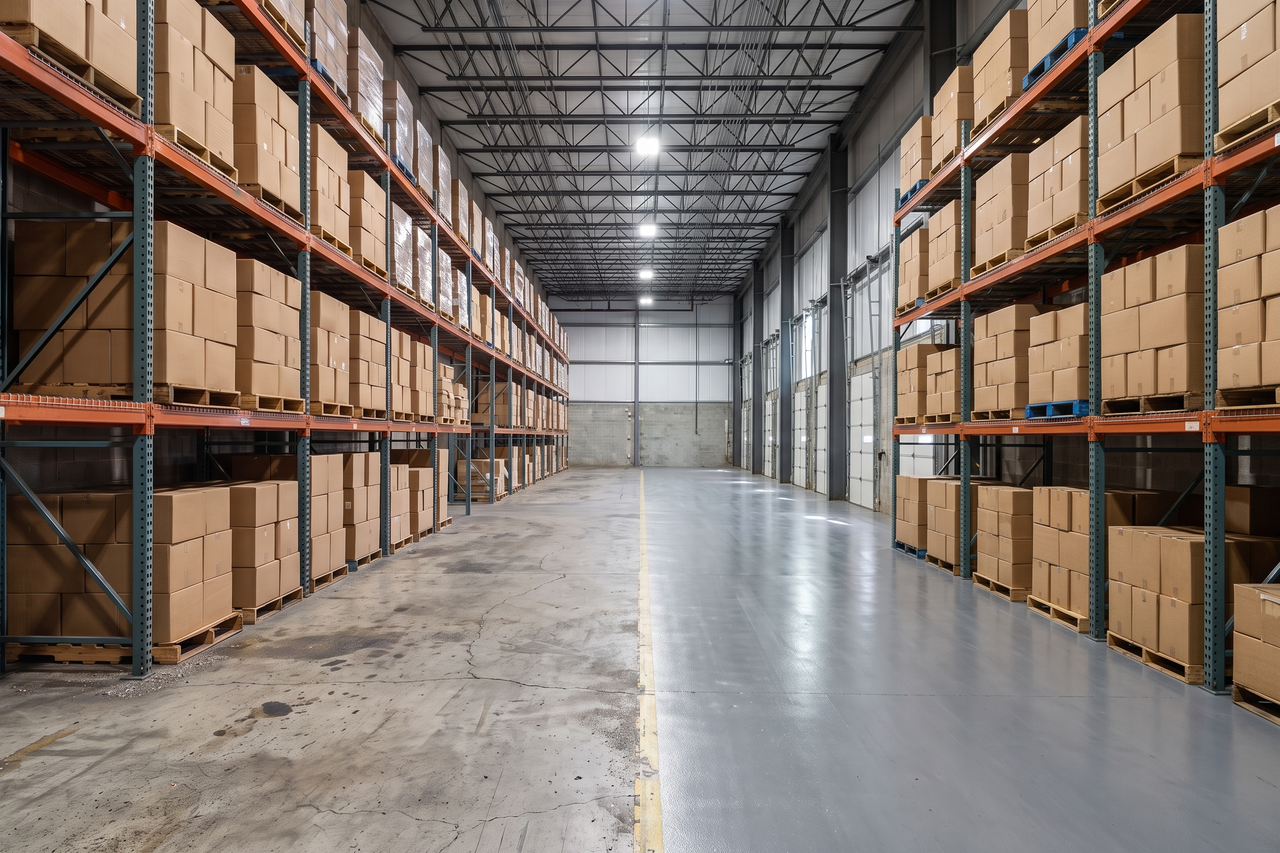
Before-and-after comparisons illustrate what a well-executed industrial coating project can achieve, though every facility is different and outcomes depend on factors specific to each project. The image below is an illustrative example of the kind of transformation that is possible when the right system is properly prepared and applied.
What Does Industrial Epoxy Flooring Cost?
Industrial flooring projects vary considerably in scope, and cost depends on the size of the area, the condition of the existing concrete, the preparation required, and the coating system specified. Facilities with significant surface damage, moisture concerns, or complex layouts will generally require more preparation work, which affects the overall project scope.
Industrial applications may also involve specialized systems — chemical-resistant coatings, broadcast aggregates for texture and traction, or safety-zone markings — that influence what a project involves. Pricing specifics require a site evaluation; the estimate conversation is where those details come together. For general context on what drives coating costs, our epoxy floor cost guide walks through the main factors.
Common Industrial Flooring Questions
What types of facilities are good candidates for industrial epoxy flooring?
Industrial epoxy coatings are often considered for warehouses, distribution centers, manufacturing plants, auto service facilities, and similar heavy-use environments. Whether a coating system is a good fit depends on the specific facility — the contractor evaluates the concrete condition, chemical exposures, and operational demands before recommending an approach. Suitability is determined on a project-by-project basis.
How is industrial epoxy flooring different from what's used in a garage or basement?
Industrial coating systems are generally formulated for heavier loads, more aggressive chemical exposure, and higher traffic volumes than residential products. Thickness, build, and chemical resistance vary by system and by manufacturer. The right specification depends on what your facility actually requires, which is why the evaluation step matters.
Can industrial coatings include safety markings and lane striping?
Safety zones, lane markings, and color-coded floor areas are options that the contractor can discuss during the estimate. Whether those elements are incorporated, and how they are applied, depends on the system selected and the specific layout of your facility. The contractor addresses those details as part of the flooring plan.
How much disruption should we expect during an industrial flooring project?
How much the project affects day-to-day operations depends on the area involved, what preparation the concrete requires, and which system is being applied. During the evaluation, the contractor covers the expected scope and schedule so your team can plan appropriately. Any sequencing or phasing arrangements are determined directly with the contractor based on what your facility actually needs.