
Concrete Preparation for Epoxy Flooring
Every epoxy floor coating depends on what happens before the first drop of product touches the slab. Surface preparation determines whether a coating bonds properly and holds up over time — or begins peeling and failing ahead of schedule.

The Short Answer
Concrete preparation for epoxy flooring typically covers three stages: mechanically profiling the surface so the coating has a grip, filling cracks and correcting surface defects, and evaluating the slab for moisture. Working through those stages creates the foundation the coating needs to perform. The contractor reviews the specific slab and determines what preparation the floor actually requires before any work starts.
The Three Essential Steps
What professional concrete preparation generally includes, from start to finish.
01
Cleaning & Grinding
The slab is cleaned, then mechanically ground or shot-blasted to strip away surface contaminants and create the open profile the coating needs to bond. Acid etching is generally not considered a sufficient substitute for mechanical grinding on most modern coating systems.
02
Crack & Surface Repairs
Cracks, spalls, and surface voids are filled and leveled before the coating is applied. Addressing those defects during preparation keeps the finished floor uniform and stops underlying problems from working their way through the coating later. See our epoxy floor repair guide for more on evaluating and repairing concrete damage.
03
Moisture Testing & Inspection
The contractor tests for moisture vapor transmission and checks the slab’s overall condition. Moisture trapped under a coating is a common cause of early delamination, and this step ensures the system selected is compatible with what the floor is actually doing.
How Does Grinding Improve Adhesion?
At a microscopic level, bare or previously sealed concrete presents a surface that coatings can’t grip effectively without preparation. Epoxy and polyaspartic systems need a slightly rough, open texture to form the mechanical bond that holds the coating in place. A slab that hasn’t been properly profiled gives the product nothing substantial to anchor to.
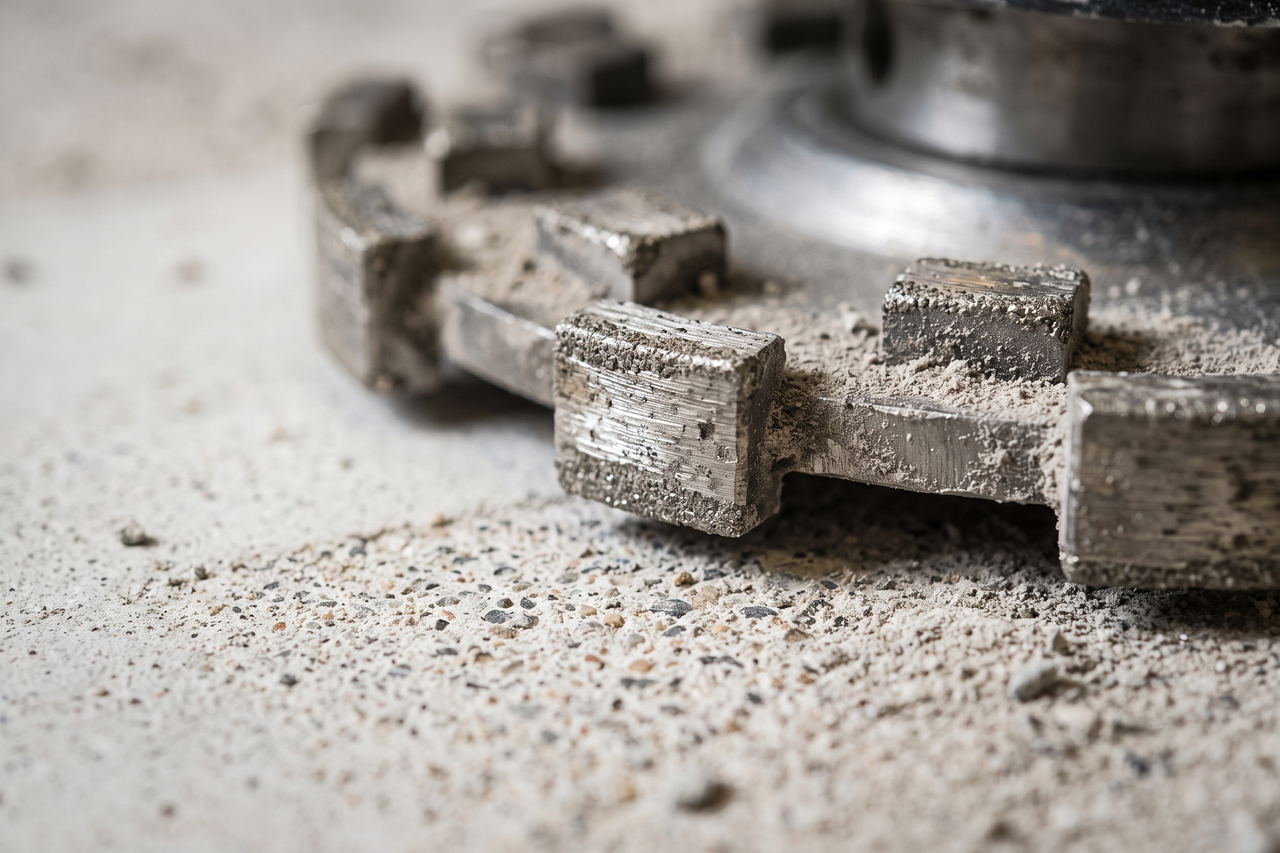
Diamond grinding removes the outermost layer of the slab and exposes the aggregate below. Shot-blasting achieves a similar result through a different mechanical method. Either way, the goal is a clean, profiled surface the coating material can grip.
The correct profile depth depends on which coating system will be applied and the current state of the slab. After reviewing the floor, the contractor determines what preparation approach is right before any work begins.
Should Cracks Be Repaired First?
Repairing cracks and surface defects is part of concrete preparation — it happens before any coating goes down. Covering a live crack with epoxy doesn’t resolve it; the coating simply spans the gap. As the slab moves with temperature cycling and load changes, that underlying crack can work its way through the finish and cause the coating to fail along that line.
The contractor assesses each crack and defect on its own terms. Hairline surface cracks are often filled with an appropriate epoxy filler. Deeper or more active cracks warrant closer examination to understand what is driving the movement before any repair material goes in.
For a thorough look at what crack evaluation and repair involves, see our epoxy floor repair guide.
Why Is Moisture Testing Important?
Concrete is not a sealed barrier — it holds and passes moisture vapor from the soil beneath, and that vapor is constantly seeking a path outward. A coating applied over concrete with elevated vapor transmission can trap that pressure between the slab and the coating above it. The result is often bubbling, separation, or adhesion failure that doesn’t become visible until the coating has been in place for some time.
Test results tell the contractor what the slab is actually doing — which determines which coating system fits the floor’s moisture profile. Not all systems handle elevated vapor rates the same way; some are more tolerant than others, and some floors benefit from a mitigation primer applied before the main coating. What the data shows shapes what happens next.
Making assumptions about moisture without testing is where a number of coating failures begin.
Can Epoxy Go Over Painted or Previously Coated Concrete?
The answer depends on what is on the floor, how securely it is still adhering, and whether the existing material is compatible with the new system being applied.
If a prior coating is peeling, flaking, or showing signs of delamination, it generally needs to be removed before anything new can go down. Adding a fresh epoxy layer on top of a failing surface does not fix the adhesion problem underneath; it puts another layer over it.
A prior coating that is still fully bonded and in sound condition may be a candidate for overcoating, depending on compatibility between the products involved. The contractor examines the existing surface during the preparation review and advises on whether coating over it is viable or whether the old material needs to come off first. The state of whatever is already on the floor is always a factor in determining what comes next.
How Should You Prepare Your Garage Before the Contractor Arrives?
The preparation itself — grinding, crack repair, moisture testing — is work the installer handles. A few things on your end help the contractor reach the full slab and evaluate it accurately.
Garage prep checklist:
- Clear vehicles, tools, storage bins, and all other items off the garage floor so the contractor has complete access to the slab.
- Note any spots where the floor stays damp after rain, shows white mineral deposits, or sounds hollow when tapped — these can signal moisture or structural concerns worth flagging before work begins.
- If the floor has been painted or previously coated, share the product name or type with the contractor if you know it.
- Ask the contractor what to expect for the schedule — the installer explains when the floor will be ready for use before work begins.
To understand the full scope of what a professional installation involves, our epoxy floor installation guide walks through the process from start to finish.
Frequently Asked Questions About Concrete Preparation
How much does concrete preparation affect a coating's performance?
Poor preparation is often part of the problem when a coating fails — alongside moisture, the coating system selected, and installation conditions. A quality coating applied over concrete that was not properly profiled, cleaned, and repaired has a harder time forming the bond it needs. Thorough prep gives the coating a better foundation for long-term performance.
Does every concrete floor need the same level of preparation?
Not at all. How much preparation a given floor needs depends on its current condition, what’s already on the surface, what its moisture readings show, and which coating system will be applied. The contractor reviews the slab and determines what level of preparation is appropriate before anything gets scheduled.
What if the concrete has quite a few cracks?
Each crack gets evaluated on its own. Surface cracks can often be filled as part of the preparation sequence. Cracks that appear active or show signs of ongoing movement may require a different treatment, and the contractor advises on the appropriate approach based on what the inspection turns up.
Is acid etching a good substitute for mechanical grinding?
Acid etching was once used in place of grinding, but for most modern coating systems it is generally considered less effective. The surface profile it creates tends to be shallower, and rinsing residue thoroughly is critical. The contractor recommends the preparation method that suits the coating and the specific floor.
How long does newly poured concrete need to cure before it can be coated?
Newly poured concrete generally needs roughly 28 days to cure before an epoxy or polyaspartic coating can be applied — this is a common guideline in the industry, not a universal rule. The actual cure window varies based on the concrete mix, ambient temperature and humidity, and the coating system being used. Before preparation begins, the contractor confirms the slab is ready.
What happens when elevated moisture is found during testing?
High moisture readings don’t automatically disqualify a floor for coating, but they do affect which products and methods are appropriate. After reviewing the results, the contractor identifies a system or primer strategy suited to what the slab is actually doing. Where the situation warrants it, a moisture-mitigation step becomes part of the preparation sequence before any coating is applied.
Ready to Get a Quote for Your Concrete Floor in Madisonville, KY?
Understanding what your specific slab needs is the first step toward a coating that performs. Connect with a flooring contractor who can evaluate the floor, outline the preparation process, and recommend the right system for your project.