
Epoxy Basement Flooring
in Madisonville, KY
Turn a cold, dusty basement slab into a clean, sealed floor that earns its square footage.
Your Basement Shouldn't Feel Unfinished From the Floor Up
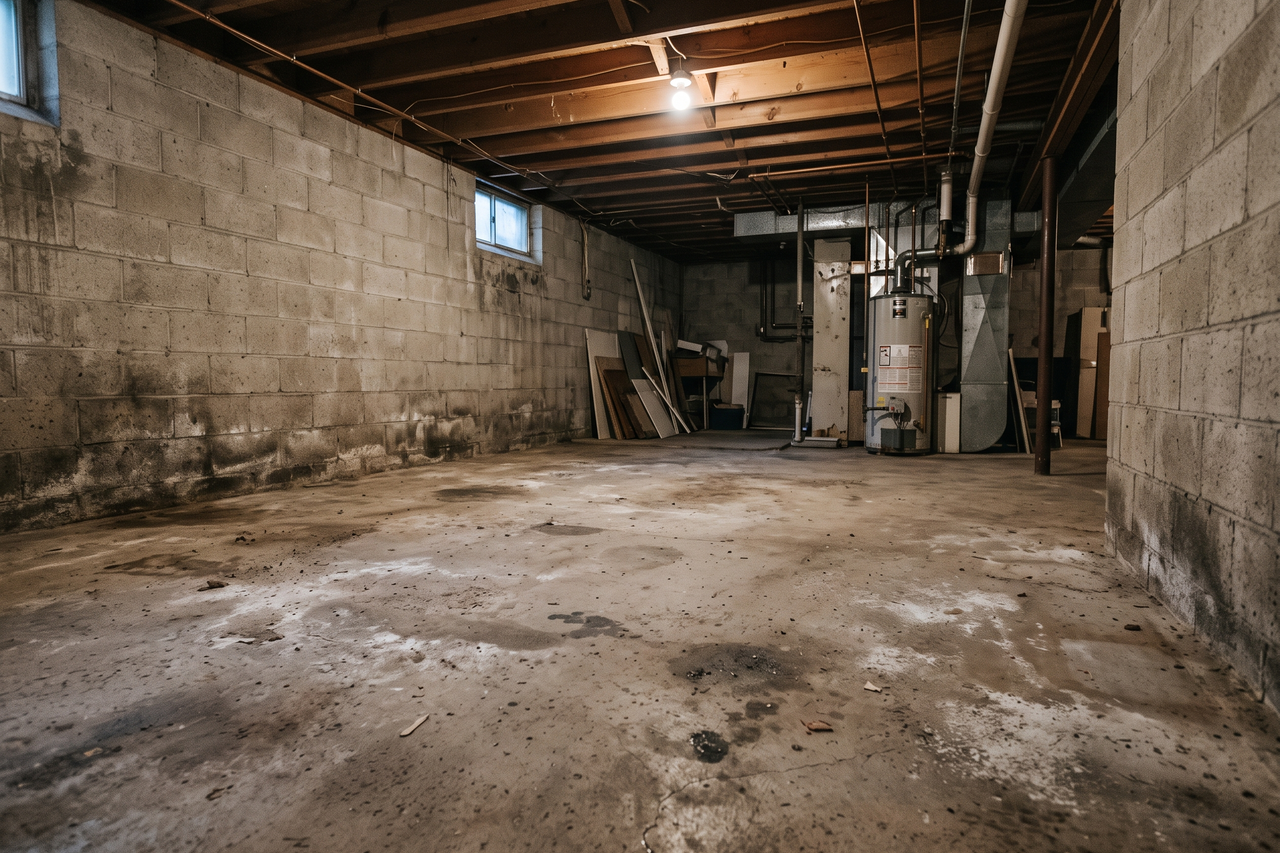
A basement holds real possibilities — room for a home gym, a recreation area, a workshop, or organized storage that actually functions. Acting on that potential is harder when the floor is bare concrete that releases dust, feels cold underfoot, and makes the space feel perpetually unfinished.
The floor is what someone notices first when they come down the stairs. Regardless of how well the walls and ceiling have been finished, a bare slab signals that the work never quite got done.
Not every flooring material that works well on the main level holds up in a basement environment. Carpet retains moisture. Certain wood-based products are susceptible to the dampness that concrete slabs can carry. A coating built for concrete gives you a surface that’s suited to the conditions where it’s actually going.
The Right Basement Floor Starts With the Concrete Underneath
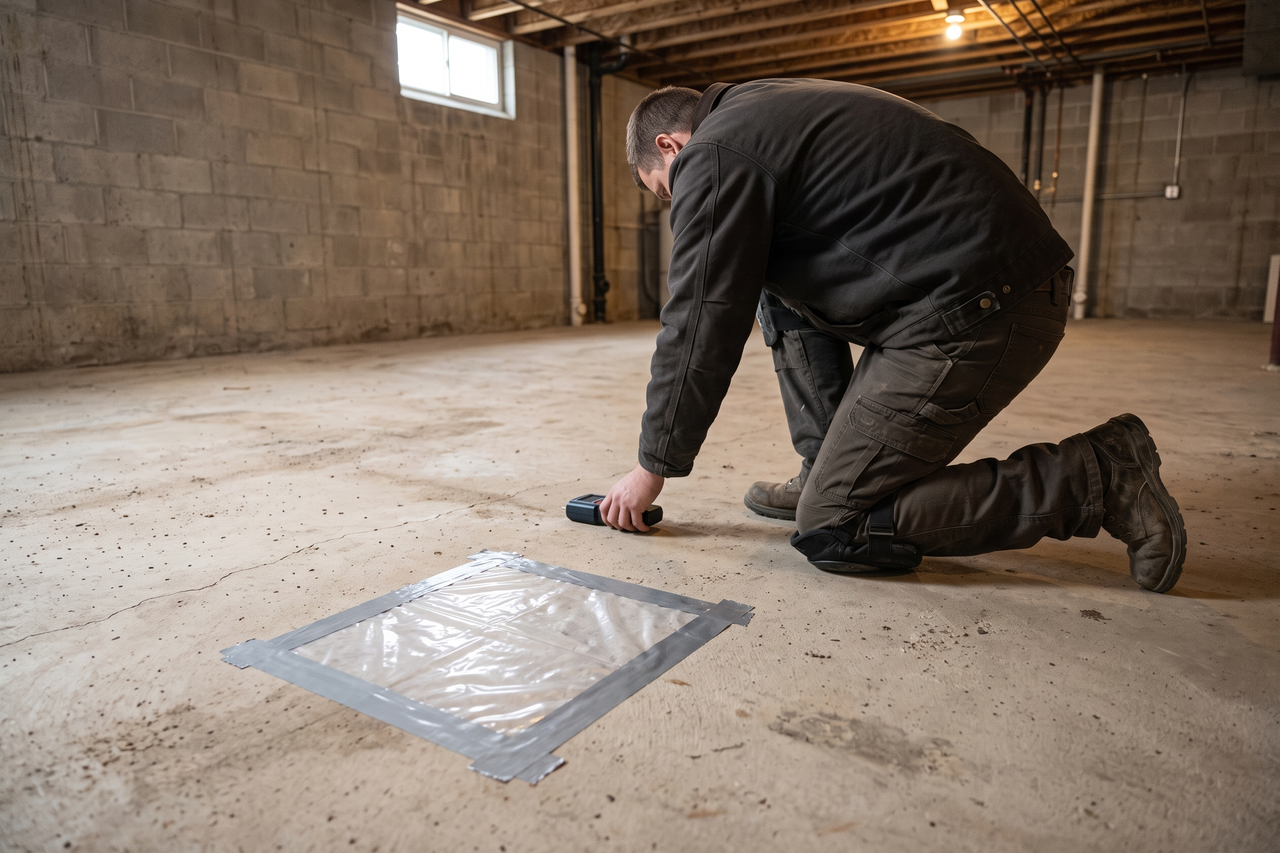
Basement concrete often presents complications that aren’t visible just from looking at the surface. Moisture migrating through from below, old adhesive or paint left over from prior work, patched areas, and hairline cracks all affect what a coating can accomplish and where the preparation process needs to begin.
The flooring contractor starts by examining the slab — including moisture testing when conditions indicate it’s warranted — rather than skipping ahead to a product recommendation. A coating applied to a basement floor that wasn’t properly assessed has a tendency to look acceptable at first, then separate from the surface as moisture pushes against the bond from below.
Once the concrete is evaluated, the finish decisions are yours. Solid colors give the room a clean, uniform surface. Decorative flake adds texture and a bit of visual depth. Metallic epoxy suits entertainment or hobby spaces where the floor itself is part of how the room looks.
A Better Basement Floor Is Easier Than You Think
Getting started requires far less effort than most people expect.
01
Tell Us About Your Basement
Describe how you intend to use the space, the current condition of the floor, and whatever you already know about moisture history or prior coatings on the slab.
02
Choose the Right Floor
The flooring contractor evaluates the concrete, discusses what the slab can support, and recommends a coating system and finish suited to your conditions and the room you want to create.
03
Transform the Space
The contractor prepares the concrete correctly and installs the coating, handing back a basement floor that is ready for real everyday use.
Ready to Make Your Basement Feel Finished?
If the basement project has been on pause simply because the starting point wasn’t clear, a conversation is the right place to begin. Describe what the space looks like and what you’d like it to become, and we’ll work to connect you with an independent flooring contractor who can evaluate the slab and, if it’s a fit, prepare a customized estimate.
Don't Turn Your Basement Floor Into a Project You Have to Do Twice
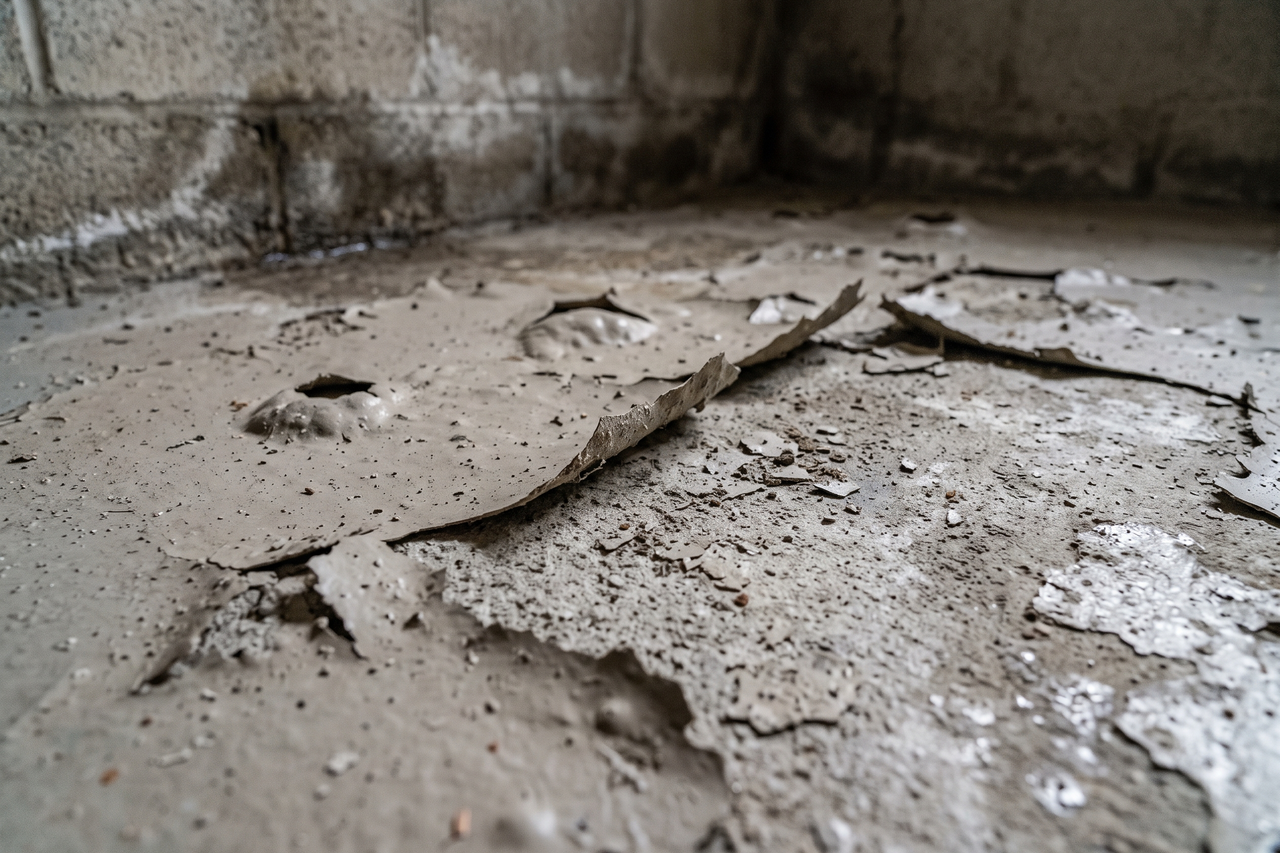
Basement coating failures rarely come without warning signs that were present from the start. Residual paint or sealer left on the surface, moisture that went untested, concrete that was never ground to a proper profile — each of these undermines a coating’s adhesion before the floor is ever asked to handle real use.
Below-grade moisture is one of the more frequent contributors to early failure. When it’s present and unaddressed before coating, it migrates upward through the slab and pushes against the underside of the newly applied surface. The result — blistering, delamination, sections lifting away — sends the project back to bare concrete.
Doing the preparation correctly from the start requires more time and more up-front investment than applying a product over a swept floor. Addressing the concrete properly gives the coating a substantially better foundation and reduces the chance of having to restart the whole project.
A Floor That Changes How Your Basement Feels
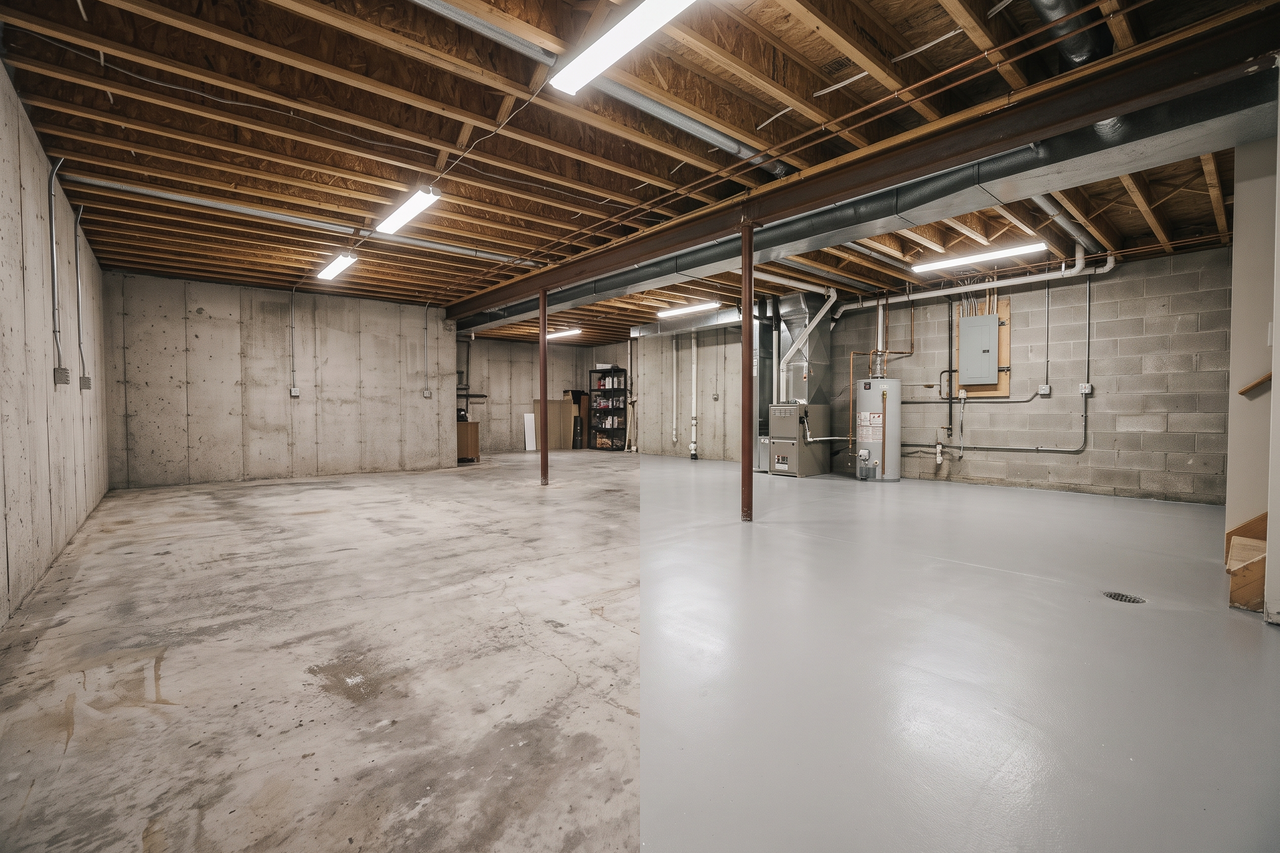
A sealed basement floor pushes light back up into the room rather than absorbing it, which tends to make the space feel more open and less dim. The surface stops releasing dust, and anything that spills wipes up without soaking into the concrete below.
That change in how the floor behaves shifts how the basement actually gets used. Storage corners that felt damp and difficult to manage become easier to work in. A room loosely set aside for gym equipment or family use becomes one people are actually willing to spend time in.
A finished floor communicates that the basement is part of the home — and that shift tends to carry more weight than the square footage alone suggests.
What Does Epoxy Basement Flooring Cost?
What a basement floor coating project costs depends on a set of variables: the dimensions of the space, what the concrete assessment turns up, whether previous coatings or adhesive residue need to come off first, any structural or surface repairs required, moisture-related preparation work, and the coating system and finish you select.
Because every basement slab presents its own set of conditions, the most useful estimate is one based on your floor specifically. A clear, accurate estimate comes from a contractor who has looked at the concrete and understands what you want the room to become.
Common Questions About Epoxy Basement Flooring
Can epoxy be applied to a basement floor that has moisture?
How much moisture is present, and where it’s coming from, shapes what’s possible — which is why an evaluation before product selection matters. Some moisture situations can be managed with an appropriate primer or barrier coat; others call for addressing the source first before any coating makes sense. The contractor looks at the slab and explains what the concrete can support.
Will an epoxy coating stop water from coming into my basement?
No. Epoxy bonds to the surface of the concrete — it does not waterproof the slab or stop water that’s pushing through from below. Active leaks, drainage issues, and persistent intrusion belong to a different problem category and need to be resolved before any coating project begins. Going ahead with coating while those issues exist tends to result in early failure.
Does old paint or adhesive on a basement floor have to be removed before coating?
In most cases, yes. For a coating to bond properly to the concrete, the surface needs to be clean and profiled down to the slab itself. The contractor evaluates what is currently on the surface and identifies what preparation is needed before any new system goes down.
Is a coated basement floor hard or cold underfoot?
The coating sits directly on top of the concrete, so the feel underfoot is similar to an uncoated slab. Area rugs or interlocking foam mats are common additions in seating or exercise areas. The real difference most people notice is that the surface is sealed and clean — which makes the basement a far more pleasant space to be in than raw, dusty concrete ever was.
What finish options are available for a basement floor?
Solid colors produce a clean, consistent surface across the whole floor. Decorative flake blends in color variation and texture underfoot. Metallic epoxy works well in rooms where the appearance of the floor is a meaningful part of the design. The right choice depends on how you plan to use the space and the look you’re after.