
Epoxy vs. Polyaspartic Flooring: What's the Difference?
Epoxy and polyaspartic are both well-established options for coating concrete — each with a distinct chemistry, cure profile, and set of strengths. If you’re sorting out which one belongs on your floor, this page covers the differences that genuinely affect the decision.

The Short Answer
Epoxy is a proven coating with a strong track record across residential, commercial, and industrial concrete floors. Polyaspartic generally cures faster than many traditional epoxy systems, holds its color better in sun-exposed spaces, and tolerates a broader temperature range during application. The right system for any given floor depends on how the space is used, the condition of the concrete, and what conditions will be present during installation — not a blanket comparison of one against the other. The flooring contractor we connect you with examines the slab and recommends the system that fits your specific situation.
Key Differences
The right system for any given floor depends on how the space is used, the condition of the concrete, and what conditions will be present during installation — not a blanket comparison of one against the other.
Epoxy
Epoxy sets through a reaction between a resin component and a hardener, producing a rigid, tightly bonded film. The cure window is longer than polyaspartic’s — a characteristic that gives applicators more working time on large or complex surfaces and allows multi-coat builds to proceed deliberately. Finish options include solid colors, color-flake broadcasts, and metallic effects, and the system has an established record on garage, basement, commercial, and light-industrial concrete.
Polyaspartic
Polyaspartic is a type of polyurea that generally cures faster than many traditional epoxy systems. That faster cure can suit projects where reducing disruption is a priority, but it also demands more from the installer — application windows are tighter, and the process requires experience and efficient technique, particularly on larger surfaces. Polyaspartic topcoats are UV-stable, meaning they resist the yellowing and chalking that prolonged sunlight can cause in many epoxy formulations. They also maintain performance across a wider temperature range than most standard epoxy systems.
Which Is Right for You
The choice isn’t simply which system is faster or which costs less. Both can produce a durable, attractive floor when installed correctly on the right surface. What determines the better fit is the space: how much UV exposure the floor gets, what conditions the concrete is in, how the area is used day to day, and what factors matter most — whether that’s UV stability, long-term economy, or a coating property specific to the project. A professional evaluation of the concrete is the practical starting point for that recommendation.
Durability
Both epoxy and polyaspartic produce hard, abrasion-resistant surfaces that outperform bare concrete, paint, and consumer-grade sealers by a significant margin. Head to head, the differences show up in specific characteristics rather than in overall durability.
One meaningful distinction is UV response. Many standard epoxy formulations yellow or chalk when exposed to sustained direct sunlight — a visible change that affects appearance but not necessarily structural performance. Polyaspartic topcoats are UV-stable by design and maintain their color in sun-exposed spaces, which makes them a common selection for garages with open exposures, covered outdoor areas, and spaces with consistent natural light.
Temperature is another consideration. Epoxy can become brittle in sustained cold and may not cure correctly below certain thresholds. Polyaspartic systems generally tolerate a wider temperature range and are less sensitive to low temperatures during application and curing. In a climate-controlled interior, this difference is often minimal — but for spaces that aren’t temperature-regulated, it can factor into the recommendation.
Install Time
For a closer look at what the preparation stage involves — and why it’s the part of the process that shapes everything after — our guide to concrete preparation for epoxy flooring covers grinding, moisture testing, and crack repair in detail.
The most meaningful difference in install time between these two systems comes from their cure rates. Polyaspartic generally cures between coats faster than many traditional epoxy systems, which means the coating stages can move forward more quickly. A multi-layer epoxy build requires each coat to reach an appropriate cure state before the next goes on.
For the property owner, that difference can translate to less disruption to a garage or commercial space. For the installer, polyaspartic’s faster chemistry places more demands on timing and technique — there is less margin for adjustment once the material is moving.
No fixed timeline covers either system. The actual duration of a project depends on several variables: the floor area, what condition the concrete is in and how much preparation it calls for, the number of layers in the specified system, and the ambient environment during and after application. The contractor walks through the expected sequence with you before work begins.
Which Is More Expensive?
For current planning figures, garage size estimates, and a full breakdown of what drives professional installation costs, our epoxy floor coating cost guide covers pricing in detail.
On the materials side, polyaspartic typically costs more than a standard epoxy system of comparable quality. The UV-resistant formulation and faster-cure chemistry command a premium. Labor costs between the two systems tend to be comparable, though projects where polyaspartic’s cure rate meaningfully reduces the overall installation span may recover some of the materials difference.
Price alone is a poor basis for the decision. A less expensive epoxy that yellows on a sun-facing floor, or a polyaspartic applied to a slab that wasn’t properly profiled, will underperform regardless of which was cheaper. The right system, installed correctly on properly prepared concrete, is what produces value over the actual life of the floor.
Which Is Better for Your Garage?
When Epoxy Makes Sense
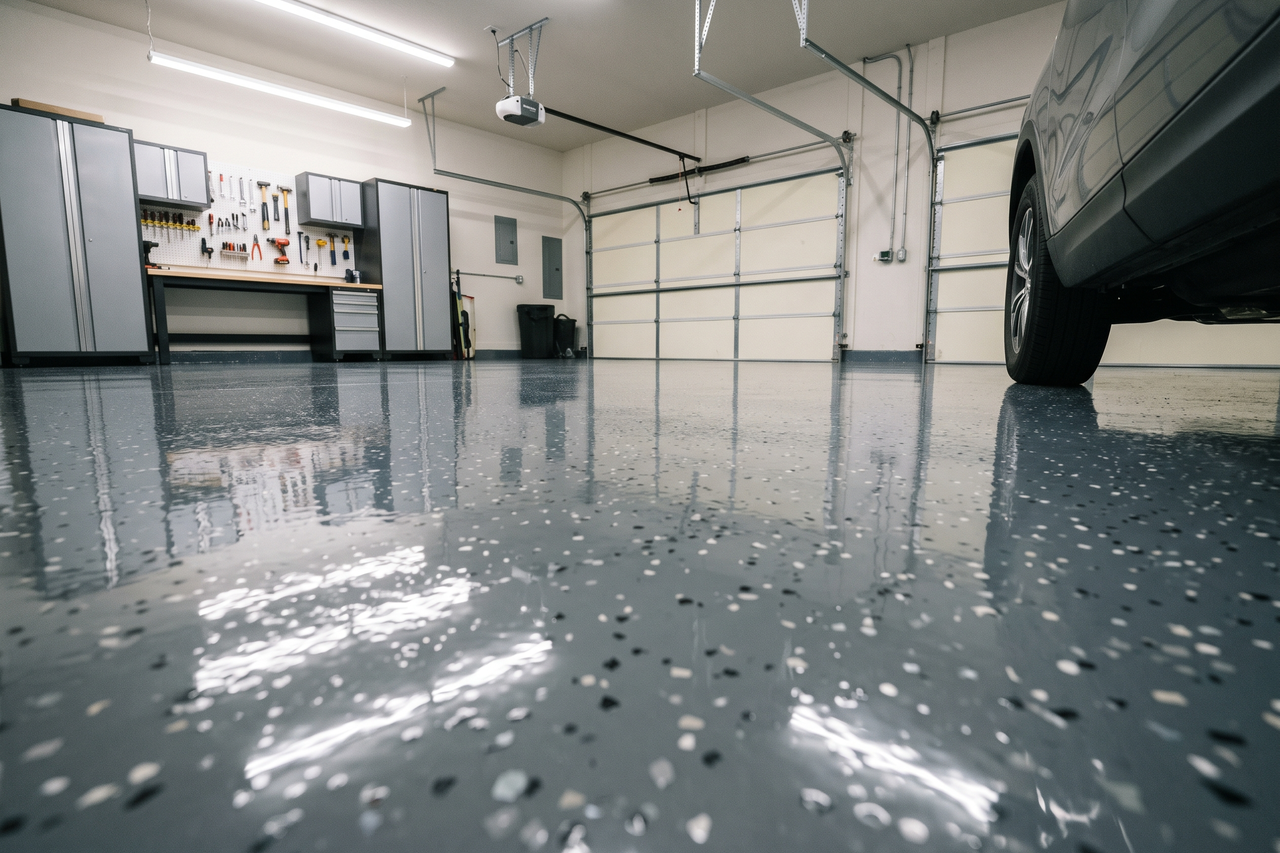
Climate-controlled garages where the floor doesn’t receive sustained direct sunlight are natural territory for epoxy. The longer application window gives installers room to manage the work on large or intricate surfaces without rushing, and the finish options — from solid colors to color-flake builds that add texture and help conceal minor surface wear — make it practical to achieve a result that both functions well and looks right. Contractors who work regularly with residential garage concrete have extensive familiarity with how epoxy behaves.
When Polyaspartic Makes Sense
Polyaspartic stands out in situations where UV exposure is a real consideration, where reduced disruption to the space carries practical weight, or where ambient temperatures favor a coating with a broader application range. Sun-facing garages, spaces with significant natural light from skylights or large windows, and properties that are difficult to take offline are cases where its characteristics translate into a concrete advantage. It also pairs well as a topcoat over an epoxy base — a hybrid build that draws on what each system does best.
Why Professional Installation Matters
Our garage floor coatings guide covers finish options, system considerations, and what to expect from the installation process in more depth if you’d like a closer look before connecting with a contractor.
Whether a floor holds up over time often depends as much on how well the concrete was prepared and how well the system was matched to the floor’s actual conditions as it does on which product name is on the container. Both epoxy and polyaspartic require properly profiled, clean, and moisture-assessed concrete to adhere the way they’re designed to.
Connecting you with a flooring contractor means the assessment of your slab comes before any product is suggested — and if the conditions don’t support a particular system, the contractor identifies that and explains it before the project moves forward.
Frequently Asked Questions
Is polyaspartic always the better option for garages?
Not always. Polyaspartic offers real advantages where UV stability matters or where faster cure is a priority, but epoxy is a strong choice for most climate-controlled residential garages and offers a wider range of finishes at a lower material cost. The right system depends on the specific floor, how the space is used, and the conditions the contractor identifies during evaluation.
Can polyaspartic and epoxy be used together?
Yes. One common approach uses an epoxy base coat for build and mechanical adhesion, then a polyaspartic topcoat for UV stability and surface durability. This hybrid approach takes advantage of each system’s strengths. The contractor evaluates the floor and recommends whether a single-system or hybrid approach makes more sense for the project.
Does UV exposure actually matter for a garage floor?
It depends on the garage. Garages that face south, have large windows near floor level, or are used with the door open for extended periods will receive more sunlight on the floor surface. Standard epoxy formulations can yellow over time under that exposure. Polyaspartic topcoats are formulated to resist UV-related color change, which is why they’re a common recommendation in those situations.
Will either coating work in an unheated garage?
Temperature during and after installation matters for both systems. Epoxy has a narrower acceptable temperature range for application and curing, and low temperatures can affect the cure. Polyaspartic systems are generally more tolerant of temperature variation. The contractor evaluates the space and the conditions before recommending a system and scheduling the work.
Does the coating system affect how the floor performs under vehicles?
Both systems can be formulated to handle vehicle loads, hot tires, and the mechanical stress of a working garage. Performance depends on the specific product, the coating thickness, and the quality of surface preparation — not just which system is on the label. The contractor recommends a system suited to how your garage is actually used.
How do I decide if I need epoxy or polyaspartic?
The most reliable way to decide is to have a flooring contractor evaluate the slab and the space. Factors including the concrete’s condition, moisture levels, the amount of UV exposure the floor gets, how the space is used, and your budget all factor into a sound recommendation. The comparison on this page provides useful context, but the actual recommendation comes from looking at the floor.
Ready to Find the Right Coating for Your Floor?
Share what the space is like and what you’re hoping the floor will do, and we’ll work to connect you with an independent flooring contractor serving Madisonville, KY and nearby communities who can evaluate the concrete and, if it’s a fit, prepare a customized quote.